
Snoring, Choking and Pauses in Sleep: Recognising Childhood Obstructive Sleep Apnoea
Table of Contents
English
Snoring, Choking and Pauses in Sleep: Recognising Childhood Obstructive Sleep Apnoea
Introduction
Childhood sleep apnea snoringWe often think snoring is funny or a sign of deep sleep. But when a child snores loudly, it is never normal. It is a distress signal.
At PRIME ENT Center Hardoi, Dr. Prateek Porwal sees many parents who say, “My child sleeps deeply but breathes heavily.” In reality, the child is fighting for air. This condition is called Obstructive Sleep Apnoea (OSA).
If left untreated, it doesn’t just affect sleep—it damages the child’s brain development, facial growth, and heart.
What is Childhood OSA? (The “Choking” Mechanism)
OSA happens when the airway is physically blocked during sleep.
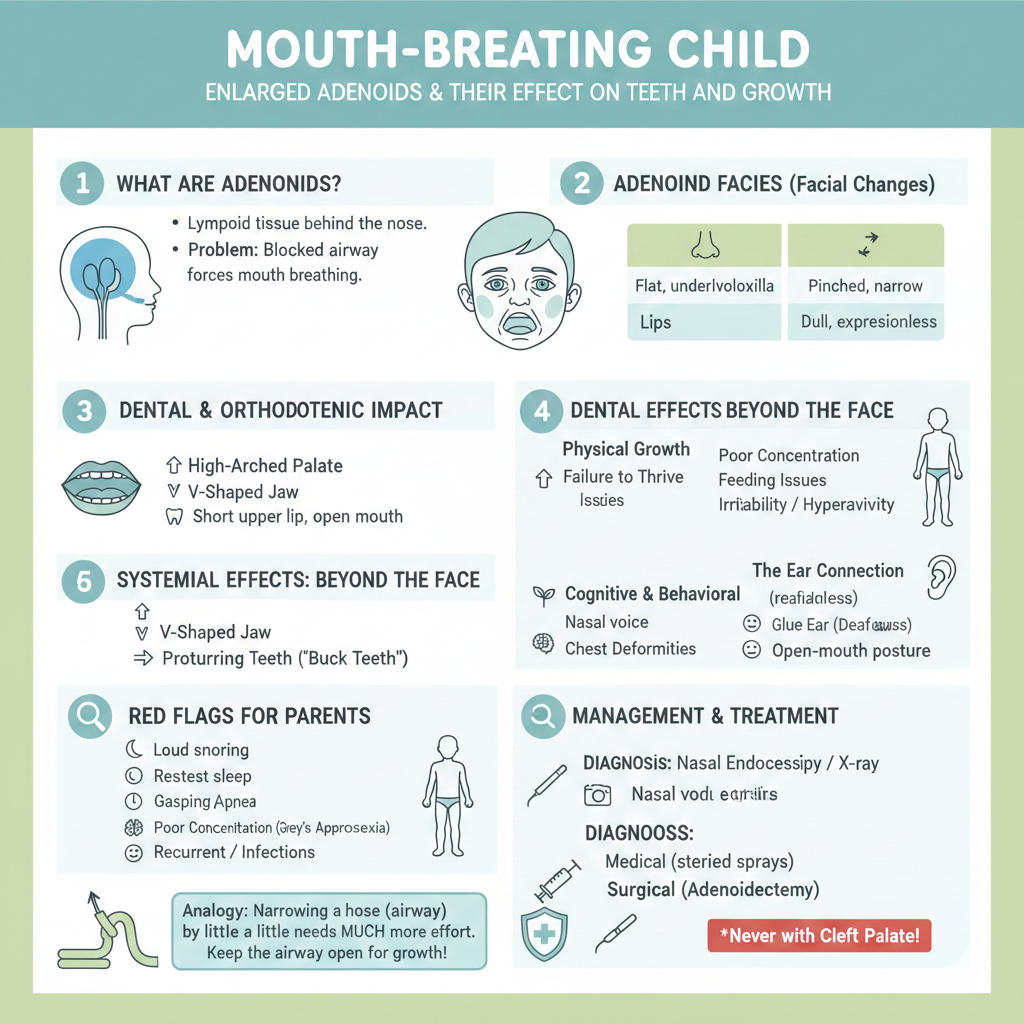
- The Culprits: In children, the most common cause is huge Tonsils and Adenoids (glands behind the nose).
- The Struggle: When the child relaxes into deep sleep, these glands collapse the airway. The child stops breathing (Apnea) for 10-20 seconds.
- The Alarm: The brain panics, wakes the child up slightly, and they take a loud, gasping breath (Choking sound).
Warning Signs: It’s More Than Just Snoring
Dr. Harshita Singh advises checking for these signs:Early detection of childhood sleep apnea snoring can prevent serious complications.
Night Symptoms:
- Loud Snoring: Louder than normal breathing.
- Pauses: You see the chest moving, but no air is coming out. Then suddenly—GASP.
- Restless Sleep: The child tosses and turns, or sleeps in odd positions (head thrown back).
- Bedwetting: A child who was potty-trained suddenly starts wetting the bed.
- Sweating: Waking up with a sweaty neck.
Day Symptoms:
- Mouth Breathing: The mouth is always open (Adenoid Face).
- Hyperactivity: Unlike adults who get tired, sleepy children get hyper/naughty.
- Poor School Focus: Labeled as “inattentive” in class.
- Fussy Eating: Trouble swallowing solid food due to big tonsils.
The “Adenoid Face”: Long-Term Damage
If a child mouth-breathes for years, their face shape changes permanently:
- Long Face: The jaw grows downwards.
- Buck Teeth: Upper teeth stick out.
- Gummy Smile: High arched palate.
Correction: Early treatment prevents this ugly facial growth.
Diagnosis at PRIME ENT Center
We don’t guess; we test.
- Nasal Endoscopy: To see the size of Adenoids.
- Polysomnography (Sleep Study): The Gold Standard.
- We attach sensors to measure oxygen levels and breathing pauses.
- AHI Score: If the child stops breathing >1 time per hour, it is OSA.
- Level 3 Home Sleep Test: A simpler test done in your own bed (Cost ~₹2000-3000).
Treatment: Do we need Surgery?
1. Adenotonsillectomy (The Cure)
- For children with big tonsils/adenoids, surgery is the first-line cure.
- Age: Can be done safely from age 2 onwards if symptoms are severe.
- Result: Snoring stops immediately. Eating improves. Growth (height/weight) often shoots up after surgery (“Catch-up Growth”).
2. CPAP Machine
- Used only if surgery is risky or not possible (e.g., in obese children or Down Syndrome).
- Mild cases may respond to Nasal Steroid Sprays (Montelukast) for 3 months, but huge glands usually need removal.
Conclusion
Childhood sleep apnea snoring requires prompt action.Snoring kills brain cells. A child needs oxygen to grow smart. If you hear gasping, don’t wait.
For evaluation, consult Dr. Prateek Porwal or Dr. Harshita Singh.
Hinglish
Bache Ka Kharrate Lena (Snoring): Kya Ye Khatarnak Hai?
Introduction
Aksar hum sochte hain ki bacha kharrate le raha hai matlab “gehri neend” mein hai. Ye galat hai. Bache ka kharrate lena kabhi normal nahi hota.
PRIME ENT Center Hardoi mein Dr. Prateek Porwal batate hain ki ye Sleep Apnea (OSA) ho sakta hai—yani neend mein saans rukna. Agar iska ilaaj na ho, toh bache ka chehra aur dimaag dono kharab ho sakte hain.
Saans Kyun Rukti Hai?
Bacho mein iska sabse bada karan hai Adenoids (Naak ke peeche ka maans) aur Tonsils ka badh jana.
- Jab bacha sota hai, ye maans saans ki nali ko band kar deta hai.
- Bacha saans lene ki koshish karta hai par hawa nahi jati.
- Fir achanak “Ghurrr” karke saans aati hai (Choking).
Pehchan (Symptoms)
Dr. Harshita Singh kehti hain ki in lakshano ko ignore na karein:
Raat mein:
- Tez Kharrate: Itni tez ki doosre kamre mein sunayi de.
- Saans Rukna: Aap dekhenge ki bache ki chhati chal rahi hai par naak se hawa nahi aa rahi. Fir achanak jhatke se saans aati hai.
- Bistar Geela Karna: Agar bada bacha bistar pe peshab kare.
- Paseena: Sote waqt bache ka sar paseene se bheeg jana.
- Ajeeb Sone ka Tareeka: Gardan peeche karke sona.
Din mein:
- Muh se Saans Lena: Bacha hamesha muh khula rakhta hai.
- Padhai mein Kamzor: Class mein dhyaan na dena.
- Khana na khana: Tonsils ki wajah se roti nigalne mein dikkat hoti hai.
“Adenoid Face”: Chehra Bigad Jana
Agar bacha saalo tak muh se saans leta hai, toh uska chehra lamba ho jata hai aur daant baahar nikal aate hain. Ise “Adenoid Face” kehte hain. Iska ilaaj bachpan mein hi ho sakta hai, bade hokar chehra theek nahi hota.
Jaanch (Diagnosis)
Hum kaise pakadte hain?
- Endoscopy: Naak mein camera daal kar adenoids ka size dekhte hain.
- Sleep Study (Polysomnography): Bache ko machine laga kar sulaya jata hai taaki pata chale ki raat mein kitni baar oxygen kam hui.
Ilaaj (Treatment)
1. Operation (Adenotonsillectomy):
- Agar adenoids aur tonsils bahut bade hain, toh surgery hi ilaaj hai.
- Ye 30 minute ka operation hai. Isse bache ki saans turant khul jati hai.
- Fayda: Operation ke baad bache ki height aur weight tezi se badhta hai kyunki use oxygen milne lagti hai.
2. Dawai:
- Halka fulka maans spray se kam ho sakta hai, par bada maans bina surgery ke nahi jata.
Salah: Agar aapka bacha sote waqt “atak-atak” kar saans leta hai, toh ye khatarnak hai. Turant dikhayein.
Appointment ke liye Dr. Prateek Porwal ya Dr. Harshita Singh se consult karein.
हिंदी
बच्चे का खर्राटे लेना (Snoring): नींद में सांस रुकने (Sleep Apnea) का संकेत
परिचय
हम अक्सर सोचते हैं कि बच्चा खर्राटे ले रहा है तो “चैन की नींद” सो रहा है। यह सबसे बड़ी गलतफहमी है। बच्चे का खर्राटे लेना कभी नॉर्मल नहीं होता।
PRIME ENT Center Hardoi में Dr. Prateek Porwal चेतावनी देते हैं कि यह Obstructive Sleep Apnea (OSA) हो सकता है। इसका मतलब है कि सोते समय बच्चे का गला घुट रहा है। अगर इलाज न हो, तो बच्चे का मानसिक विकास और चेहरे की बनावट हमेशा के लिए बिगड़ सकती है।
ऐसा क्यों होता है?
बच्चों में इसका मुख्य कारण है Adenoids (नाक के पीछे का मांस) और Tonsils का बढ़ जाना।
- सोते समय यह बढ़ा हुआ मांस सांस की नली को ब्लॉक कर देता है।
- बच्चा 10-20 सेकंड के लिए सांस नहीं ले पाता (Apnea)।
- फिर वह तड़पकर एक जोर की सांस (Gasp) लेता है। इससे दिमाग को पूरी ऑक्सीजन नहीं मिलती।
लक्षण (Warning Signs)
Dr. Harshita Singh के अनुसार, इन संकेतों पर नजर रखें:
रात के लक्षण:
- तेज खर्राटे: बड़ों से भी तेज आवाज।
- सांस अटकना: बीच-बीच में सांस रुक जाना और फिर झटके से आना।
- बेचैन नींद: बच्चा पूरे बिस्तर पर करवटें बदलता रहता है।
- बिस्तर गीला करना (Bedwetting): सांस रुकने के डर से बच्चा नींद में पेशाब कर देता है।
- पसीना: सोते समय सिर और गर्दन में पसीना आना।
दिन के लक्षण:
- मुंह से सांस लेना (Mouth Breathing): बच्चा हमेशा मुंह खुला रखता है।
- गुस्सा और चिड़चिड़ापन: नींद पूरी न होने से बच्चा जिद्दी हो जाता है।
- खाना न खाना: बड़े टॉन्सिल के कारण बच्चा ठोस खाना (रोटी) नहीं निगल पाता।
चेहरा बिगड़ना (Adenoid Face)
अगर बच्चा सालों तक मुंह से सांस लेता रहे, तो उसका चेहरा लंबा हो जाता है और ऊपर के दांत बाहर निकल आते हैं। इसे “Adenoid Face” कहते हैं। अगर समय रहते इलाज न हो, तो यह कुरूपता स्थायी हो जाती है।
जांच (Diagnosis)
- Endoscopy: हम दूरबीन से नाक के पीछे का मांस (Adenoids) देखते हैं।
- Sleep Study (नींद की जांच): यह देखने के लिए कि रात में ऑक्सीजन कितनी कम हो रही है। यह टेस्ट घर पर भी हो सकता है (Level 3 Study)।
इलाज (Treatment)
1. सर्जरी (Adenotonsillectomy):
- अगर मांस ज्यादा बढ़ा है, तो ऑपरेशन (Surgery) ही एकमात्र पक्का इलाज है।
- यह 2 साल की उम्र के बाद सुरक्षित रूप से किया जा सकता है।
- ऑपरेशन के बाद बच्चे की लंबाई और वजन (Growth) तेजी से बढ़ता है।
2. CPAP मशीन:
- जिन बच्चों का ऑपरेशन नहीं हो सकता, उन्हें रात में ऑक्सीजन मशीन (CPAP) लगाकर सुलाया जाता है।
निष्कर्ष: खर्राटे लेना बच्चे के दिमाग के लिए हानिकारक है। अगर बच्चा रात में सांस के लिए संघर्ष कर रहा है, तो आज ही डॉक्टर से मिलें।
Appointment के लिए Dr. Prateek Porwal या Dr. Harshita Singh से consult करें।
