Table of Contents
English Version
Ear Pain in Winter (Sardi me Kaan Dard): Understanding Symptoms in Children vs. Adults, Recognizing Emergencies, and Finding Effective Solutions
Ear pain winter (sardi kaan dard infection) is a common winter ailment.Ear pain is one of the most frequent reasons for medical consultation during winter months, affecting both children and adults across the globe. In Hardoi and across India, the incidence of ear pain-related clinic visits peaks from November through March. While many people associate a “winter cold” with only a runny nose or sore throat, the ear is often the silent third player in this respiratory trio. Winter creates the perfect storm for ear infections: upper respiratory tract infections (URTIs) are at their peak, cold air impairs immune defenses, and the anatomy of the ear—especially in children—makes it vulnerable to infection.
At PRIME ENT Center Hardoi, Dr. Prateek Porwal and Dr. Harshita Singh see dozens of ear pain patients every winter, ranging from crying infants to adults with severe otalgia (ear pain). Understanding the causes, recognizing the differences between child and adult presentations, and knowing which symptoms demand emergency evaluation are crucial for preventing permanent hearing loss and serious complications.
TL;DR: Quick Summary
Sardi me Kaan Dard (winter ear pain) is common during winter months in children and adults, caused by upper respiratory infections (URTIs) and Eustachian tube dysfunction.
Key symptoms in children include fever, ear pulling, and irritability; in adults: ear pain, fullness, and hearing loss.
Treatment includes pain relief, antibiotics (if bacterial), and decongestants. Seek emergency care for mastoiditis, facial paralysis, sudden hearing loss, or severe headache with fever.
Prevention: Keep warm, avoid cold air exposure, treat URTIs promptly, and maintain good hygiene to reduce infection risk during winter months.
The Ear’s Connection to Winter Illness: Why the Eustachian Tube Matters
The ear is divided into three anatomical regions: the external ear (the visible part), the middle ear (the air-filled space behind the eardrum), and the inner ear (responsible for hearing and balance). Most winter ear infections involve the middle ear, and understanding why requires knowing about the Eustachian tube.
The Eustachian Tube: Your Ear’s Pressure Relief Valve
The Eustachian tube is a small, narrow passage (roughly 35–38 mm long in adults) that connects the middle ear to the nasopharynx (the back of the nose and throat). Despite its small size, it performs three critical functions:
- Pressure Equalization: With every swallow, yawn, or Valsalva maneuver (gentle ear-popping), the Eustachian tube opens briefly to equalize air pressure inside the middle ear with atmospheric pressure. Without this, pressure differences would cause pain and eardrum rupture.
- Drainage: The Eustachian tube provides a pathway for fluid and secretions from the middle ear to drain into the throat—normally 200–300 microliters of fluid drain daily, completely unnoticed.
- Protection: The tube’s lining has specialized epithelium and immune components (IgA, lysozyme, lactoferrin) that protect the middle ear from pathogens ascending from the throat.
When this tube becomes blocked—due to cold-induced swelling, adenoid enlargement, or inflamed throat tissues—all three functions fail, leading to trapped fluid, negative pressure, and bacterial overgrowth.
Why Children Are More Vulnerable Than Adults
Anatomical differences make children’s ears dramatically more susceptible to infection:
| Feature | Children (Age < 7) | Adults |
|---|---|---|
| Eustachian Tube Length | ~17–18 mm | ~35–38 mm |
| Eustachian Tube Angle | ~10° from horizontal (nearly flat) | ~45° from horizontal (angled downward) |
| Tube Diameter | Narrower | Wider |
| Muscular Function | Tensor veli palatini muscle less efficient | More efficient opening |
| Adenoid Size | Large (lymphoid hyperplasia common) | Atrophied, less relevant |
| Infection Risk | 80% of children experience ≥1 AOM before age 2 | Lower—60–70% of adults never have AOM |
The horizontal orientation of a child’s Eustachian tube essentially creates a “flat drainage pipe” compared to the angled pipe in adults. When bacteria-laden secretions from a winter cold drip into this flat tube, gravity cannot help clear them—they simply accumulate and become infected.
Dr. Prateek Porwal explains: “A child’s Eustachian tube is like a flat gutter on a roof. When it rains (a cold causes excess mucus), water collects in the gutter. In adults, the roof is angled, so water drains away. This single anatomical difference is why winter ear infections are 5–10 times more common in children under 5 than in teenagers or adults.”
Acute Otitis Media (AOM): The Classic Winter Ear Infection in Children
Acute Otitis Media (AOM) is a rapidly developing bacterial or viral infection of the middle ear. It is the most common bacterial infection diagnosed in childhood, with peak incidence between 6 and 24 months of age. Approximately 80% of children experience at least one episode of AOM by age 2, and 40% of children have three or more episodes (considered “otitis-prone”).
How AOM Develops: The Winter Cold → Ear Infection Chain
- Viral URTI (Days 1–3): A winter cold virus (rhinovirus, RSV, influenza) infects the nasal cavity and throat, causing inflammation, mucus production, and mucosal swelling.
- Eustachian Tube Blockage (Days 1–5): Inflamed tissue and excess mucus block the Eustachian tube opening in the nasopharynx. The tensor veli palatini muscle fails to open the tube effectively, and adenoids (if enlarged) physically obstruct the opening.
- Negative Middle Ear Pressure (Days 2–7): With the tube blocked and normal middle ear gas absorbed by blood, negative pressure develops inside the middle ear—like creating a vacuum.
- Fluid Accumulation (Days 3–10): This negative pressure draws fluid from the surrounding tissues into the middle ear cavity. Initially, this fluid is sterile (non-infected).
- Bacterial Invasion (Days 5–14): Pathogenic bacteria from the nasopharynx migrate up the blocked Eustachian tube into the fluid-filled middle ear. Common culprits include:
- Streptococcus pneumoniae (most common, ~30–50% of bacterial AOM cases)
- Haemophilus influenzae (non-typeable strains, ~20–30%)
- Moraxella catarrhalis (~10–15%)
- Pus Formation and Pressure Rise (Days 7–14): Bacteria multiply rapidly in the nutrient-rich middle ear fluid. Pus accumulates, pressure rises, and the child experiences severe otalgia.
- Potential Eardrum Rupture (Days 10–21): If untreated, pressure may rupture the eardrum (tympanic membrane), and pus drains into the ear canal (otorrhoea). While this rupture provides pressure relief and pain reduction, it carries risks of hearing loss and serious complications.
Key Point: Research shows AOM-related emergency visits peak in winter—particularly January through March in the Northern Hemisphere (and June through August in Australia). One study found a 27% increase in AOM emergency visits during winter cold spells compared to summer.
Common Bacterial Pathogens in Winter AOM
| Pathogen | Frequency | Antibiotic Sensitivity |
|---|---|---|
| Streptococcus pneumoniae | 30–50% | Penicillin/Amoxicillin (most); some resistant strains |
| Haemophilus influenzae (non-typeable) | 20–30% | Ampicillin (some resistance); Amoxicillin-clavulanate, cephalosporins |
| Moraxella catarrhalis | 10–15% | Beta-lactamase producer; requires amoxicillin-clavulanate or cephalosporin |
Sardi me Kaan Dard: Symptoms of AOM in Young Children (Bacche ke Lakshan)
Young children, especially those under two years, cannot clearly express ear pain. Parents and caregivers must recognize indirect signs of distress:
Classic Signs Parents Notice:
- Ear Pulling or Tugging: Infants will repeatedly pull, rub, or tug at the affected ear—sometimes frantically. This is one of the most common signs that alerts parents something is wrong.
- Otalgia (Ear Pain): The child is irritable, inconsolable, and in obvious distress. Pain may be worse when lying down or at night, when fluid pressure in the ear increases.
- Sleep Disruption: The child cannot sleep, wakes repeatedly, or cries through the night.
- Fever: Often high—ranging from 39°C to 40°C (sometimes higher in severe cases). Fever suggests bacterial infection, not simple viral fluid.
- Systemic Illness Signs:
- Loss of appetite or refusal to eat/drink
- Vomiting or loose stools (not truly “gastrointestinal”—the fever and otalgia cause these)
- General malaise and fatigue
- Inconsolable crying for prolonged periods
- Otorrhoea (Ear Discharge): If the eardrum ruptures, pus mixed with blood leaks from the ear canal. While this sounds frightening, it actually relieves pressure and reduces pain.
- Hearing Difficulties: Parents may notice the child is less responsive to sounds, not turning toward voices, or being “clumsy” (balance difficulties from middle ear inflammation affecting the inner ear).
- Postauricular Swelling: In severe, untreated cases, swelling appears behind the ear (mastoiditis—see Red Flags section).
Timeline of Symptoms:
- Days 1–3: Fever, irritability, ear pulling begin
- Days 3–5: Pain peaks; child may be extremely distressed
- Days 5–7: Without treatment, risk of eardrum perforation increases
- Days 7–14: With antibiotics, symptoms improve; fever drops within 48 hours
Dr. Harshita Singh advises: “If your infant or toddler has a fever, is pulling their ear, and was recently sick with a cold, assume it’s AOM and seek evaluation. Do not wait. Early antibiotics can prevent complications.”
Sardi me Kaan Dard: Symptoms of AOM in Adults (Bade ke Lakshan)
Like ear pain winter (sardi kaan dard infection) in children,Adults typically develop AOM as a complication of severe winter colds or upper respiratory infections, but it is much less common than in children (occurring in only 1–2% of adults with URTI, compared to 20–40% of children).
Adult Presentation:
- Severe Otalgia: Described as deep, throbbing, continuous pain—sometimes worse at night. Pain is often more intense than the original sore throat or congestion.
- Aural Fullness: A sensation of pressure or “blockage” in the affected ear, as if the ear is underwater or filled with cotton.
- Hearing Impairment: Noticeable conductive hearing loss. Adults often report difficulty hearing on the affected side, especially in background noise.
- Tinnitus: A buzzing, crackling, or bubbling sound in the ear—often worse when blowing the nose or swallowing hard.
- Autophony: Hearing one’s own voice echo or sound “muffled” inside the head—a uniquely uncomfortable sensation.
- Minimal Systemic Illness: Unlike children, adults rarely develop high fever. Temperature may be normal or only mildly elevated (37–38°C).
- Symptoms Following a Known URTI: The adult typically recalls an upper respiratory infection 3–7 days prior to ear pain onset.
Why Adults Are Less Vulnerable:
- Larger, better-angled Eustachian tubes drain fluid more effectively
- Adenoids are absent or atrophied (no obstruction)
- More efficient immune response
- Better mucociliary clearance
However, adults with recurrent ear infections, immunocompromise, or anatomical abnormalities (e.g., cleft palate, Down syndrome) remain at higher risk.
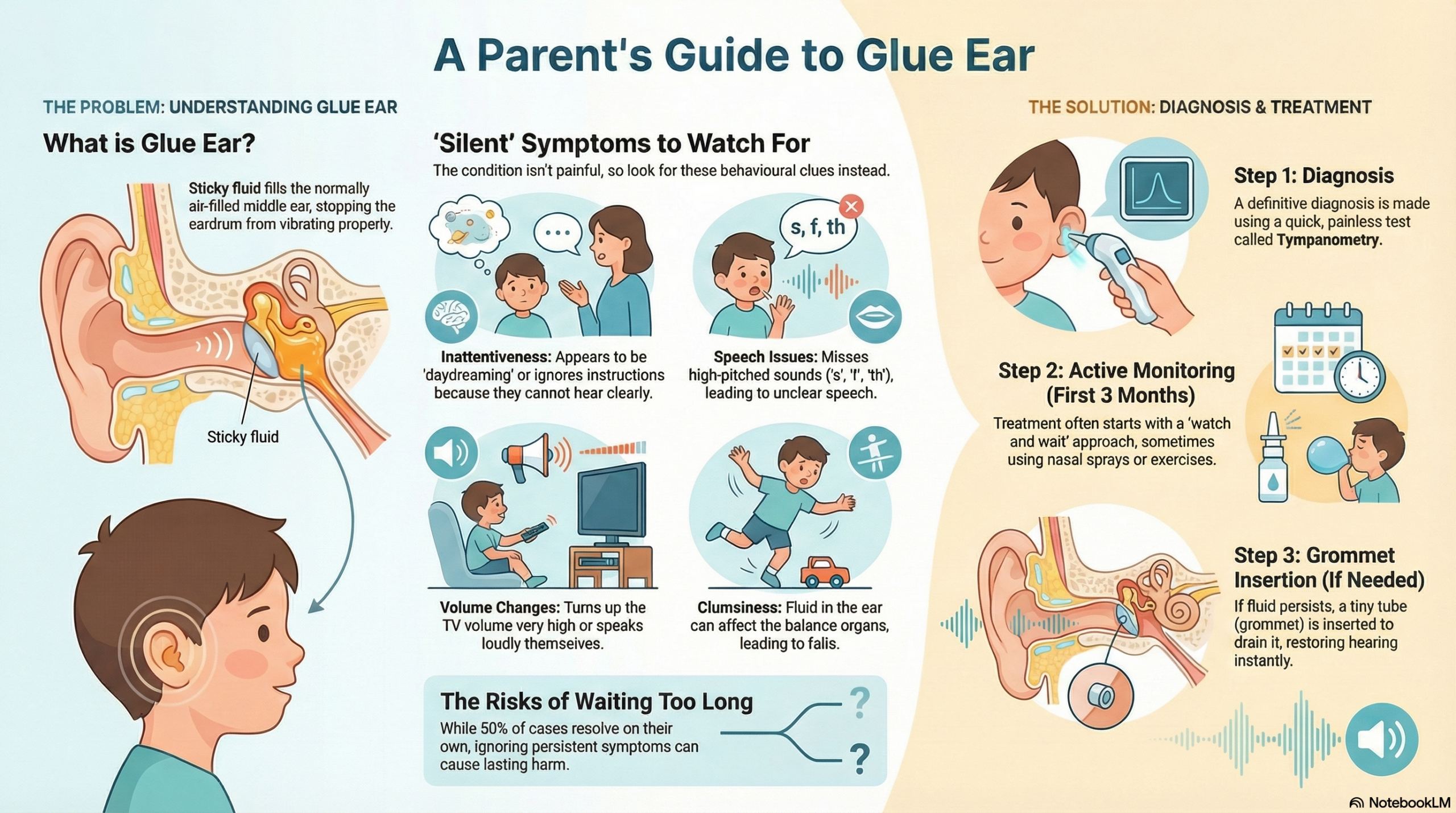
Sardi me Kaan Dard: Otitis Media with Effusion (OME) “Glue Ear” – The Silent Winter Complication
During ear pain winter (sardi kaan dard infection) episodes, Not all post-cold fluid collections in the ear become infected. Otitis Media with Effusion (OME)—popularly called “glue ear”—is a sterile (non-infected) collection of thick, mucoid fluid behind the eardrum that can persist for weeks or months after a winter cold.
Key Differences from AOM:
| Feature | AOM (Acute Otitis Media) | OME (Otitis Media with Effusion) |
|---|---|---|
| Infection | Yes (bacterial or viral) | No (sterile fluid) |
| Pain | Severe, acute onset | Painless or minimal |
| Fever | Present (often high) | Absent |
| Eardrum Appearance | Red, bulging, pus visible | Dull, normal color, air-fluid level visible |
| Duration | Days to weeks | Weeks to months |
| Hearing Loss | Conductive (20–30 dB) | Conductive (10–40 dB) |
| Main Symptom | Pain | Hearing difficulty, academic underperformance |
Symptoms of OME:
- Muffled or Reduced Hearing: The child reports difficulty hearing, especially in noisy settings (classroom, playground). May require repetition of instructions.
- “Cracking” or “Popping” Sounds: When yawning, chewing, or swallowing, the child hears crackling or popping—caused by fluid moving or the Eustachian tube trying to open.
- Tinnitus: Low-pitched roaring or buzzing, especially noticeable in quiet rooms.
- Balance Difficulty: Fluid in the middle ear can affect the inner ear’s balance organs (vestibular system), causing mild dizziness or clumsiness.
- Behavioral Changes: In school-age children, new-onset inattention, behavioral problems, or academic decline may signal undiagnosed OME causing hearing loss.
- No Pain, No Fever: This distinguishes OME from AOM. Parents may not recognize OME as a problem initially.
Clinical Significance of OME:
OME is extremely common after winter colds—up to 90% of children have fluid after URTI, but most resolve spontaneously within 3 months. However, persistent OME (>3 months) can cause:
- Conductive hearing loss affecting speech development (in children under 3)
- Educational impact (older children missing nuances in classroom speech)
- Disrupted play and social interaction (reduced hearing means reduced engagement)
At PRIME ENT Center Hardoi, children with persistent OME beyond 3 months are evaluated for audiology testing and may be candidates for myringotomy with tympanostomy tube (grommet) insertion if hearing loss is confirmed.
Sardi me Kaan Dard: Otitis Externa (OE) – The Winter Ear Canal Infection
Ear pain winter (sardi kaan dard infection) can also affect the outer ear. AAlthough Otitis Externa (outer ear canal infection, sometimes called “swimmer’s ear”) is classically a summer condition, winter triggers exist and should not be forgotten.
Winter-Specific Causes of OE:
- Retained Water from Hot Showers: Hot water entering the ear during winter baths, if not dried properly, can macerate the ear canal skin and introduce bacteria or fungi.
- Ear Canal Trauma: Using cotton buds to scratch itchy ears (caused by dry winter air or dermatitis) damages the canal’s protective lining, allowing Staphylococcus aureus, Pseudomonas aeruginosa, or fungi (Candida, Aspergillus) to invade.
- Dermatitis: Winter dryness or eczema flares can cause itching, which leads to scratching and infection.
Symptoms of OE:
- Intense Pain on Ear Movement: Pulling the outer ear (pinna) or pressing the small bump in front of the ear canal (tragus) causes severe, sharp pain—a hallmark of OE.
- Itching: Prominent, especially in fungal cases (otomycosis), which can be maddening and lead to more scratching.
- Ear Canal Swelling: The canal may become so edematous that it narrows or closes, blocking sound conduction (conductive hearing loss) and preventing drainage.
- Discharge: Usually starts as clear, progresses to purulent (yellowish), and may have an unpleasant odor.
- Hearing Loss: Due to canal swelling and discharge accumulation.
Distinction from AOM:
- OE: Painful with ANY ear movement; intact eardrum on examination
- AOM: Deep ear pain; eardrum is red, bulging, or perforated
Sardi me Kaan Dard: Referred Otalgia – When Ear Pain Isn’t from the Ear
In winter, many people present to ENT clinics with complaints of “earache,” yet the ear itself is perfectly healthy. This is referred otalgia—pain perceived in the ear but originating from another structure sharing the same nerve supply.
The ear receives sensory innervation from multiple nerves, which also supply:
- The throat (cranial nerve IX—glossopharyngeal)
- The jaw and teeth (cranial nerve V—trigeminal)
- The neck (cervical nerves C2–C3)
Common Winter Causes of Referred Otalgia:
- Acute Pharyngitis or Tonsillitis: Severe throat infection causes pain that radiates to the ear via the glossopharyngeal nerve (CN IX). Often, pain in the ear is more prominent than throat pain.
- Peritonsillar Abscess (Quinsy): A collection of pus on the side of the throat—a severe winter complication—causes severe referred ear pain.
- Temporomandibular Joint (TMJ) Dysfunction: Winter stress, teeth clenching, or jaw misalignment can trigger TMJ pain that radiates to the ear.
- Dental Problems: Impacted wisdom teeth or severe tooth decay (caries) can refer pain to the ear via the trigeminal nerve (CN V).
- Cervical Spondylosis: Neck arthritis in older adults can cause neck and referred ear pain.
Diagnostic Clue:
In referred otalgia, the ear examination is completely normal—eardrum appears healthy, canal is clear, hearing is normal. The key is examining the throat, teeth, and jaw to identify the true source.
Dr. Prateek Porwal notes: “I see patients who come in convinced they have an ear infection, but their exam is normal. When I examine their throat, they have severe tonsillitis. The pain referred to the ear was so prominent that it masked the throat problem.”
Stages of Untreated AOM: What Happens Without Treatment
If a child or adult with AOM does not receive antibiotics, the infection can progress through predictable stages (though modern antibiotics make progression to later stages rare):
| Stage | Timeline | What Happens | Clinical Signs |
|---|---|---|---|
| Congestion | Days 1–3 | Mucosal swelling, vasodilation | Red eardrum, no pus yet |
| Suppuration | Days 3–7 | Pus accumulates | Bulging, yellow “nipple” of pus forms |
| Perforation | Days 7–14 | Eardrum ruptures | Discharge pulsates (“lighthouse sign”) |
| Resolution | Days 14–21 | Infection clears (with antibiotics or immune response) | Eardrum heals (usually with small scar) |
| Complications (if progression continues) | Weeks | Mastoiditis, facial nerve paralysis, labyrinthitis | Danger zone |
Sardi me Kaan Dard: Emergency Red Flags – When Ear Pain Demands Immediate Attention
Most ear pain can be managed with antibiotics, observation, and analgesia. However, certain symptoms demand same-day or emergency evaluation:
» Insert gaps bLooking for the Best ENT Specialist in Hardoi? Why PRIME ENT Centre is Your Top Choiceetween keywords
The mastoid bone, located immediately behind the ear, contains air cells that can become infected if AOM is untreated. Signs include:
- Swelling, redness, and tenderness behind the ear
- The ear pushed forward (outward) by the swelling—a classic sign
- High fever, severe malaise
- Postauricular fluctuance (fluid collection)
Mastoiditis is a serious infection that can spread to the brain. Requires same-day evaluation and possible imaging (CT) + IV antibiotics ± surgery.
2. Facial Nerve Paralysis with Ear Infection
If ear pain is accompanied by sudden drooping of one side of the face, this suggests Ramsay Hunt Syndrome (herpes zoster oticus) or facial nerve involvement from AOM. Requires emergency evaluation, imaging, and high-dose antivirals ± steroids.
3. Labyrinthitis: Inner Ear Inflammation
Bacterial infection can spread to the inner ear, causing:
- Severe vertigo (dizziness), especially with head movement
- Nausea and vomiting
- Hearing loss
- Unsteady gait, inability to walk straight
Requires same-day evaluation, imaging (MRI), and IV antibiotics.
4. Sudden Sensorineural Hearing Loss: A Medical Emergency
If ear pain or infection is accompanied by sudden, complete loss of hearing in one ear (without previous hearing problems), this is a medical emergency—even if it seems like it’s “just” from the ear infection.
Critical: Sudden sensorineural hearing loss (SSNHL) must be treated with high-dose steroids within 72 hours of onset. Waiting longer results in permanent hearing loss. Treatment includes:
- Oral prednisone 60 mg/day for 7–10 days
- OR intratympanic steroid injection (dexamethasone) into the middle ear
- Urgent audiometry to confirm diagnosis
Dr. Prateek Porwal emphasizes: “Sudden deafness is an otolaryngologic emergency. If a patient with ear pain reports they ‘can’t hear anything’ in that ear, we treat it as an emergency until proven otherwise. Time is literally the organ of Corti’s enemy.”
5. Severe Headache with Fever and Ear Discharge
This constellation suggests possible meningitis—infection of the brain and spinal cord membranes. Requires emergency evaluation, possible lumbar puncture, and IV antibiotics.
6. Discharge Lasting >3–4 Weeks After Eardrum Perforation
If the eardrum ruptures (due to pressure from pus), drainage is expected initially. However, if discharge persists for more than 3–4 weeks, it may indicate:
- Chronic suppurative otitis media (CSOM)
- Cholesteatoma (dangerous, erosive middle ear disease)
Requires imaging (CT) and possible surgery.
Management and Treatment: A Systematic Approach
Pain Relief (Most Important Step)
Adequate analgesia is the first priority in ear pain management:
- Paracetamol (Acetaminophen): 15 mg/kg per dose, every 4–6 hours (children); 500–1000 mg every 4–6 hours (adults). Max 4 g/day.
- Ibuprofen: 10 mg/kg per dose, every 6–8 hours (children); 200–400 mg every 4–6 hours (adults). Max 1200 mg/day (children) or 3200 mg/day (adults).
- Topical Analgesics: Warm oil drops or anesthetic drops (e.g., antipyrine-benzocaine) provide temporary relief.
- Avoid Aspirin in Children: Risk of Reye’s syndrome (rare but severe).
- Warm Compress: Applying a warm—not hot—damp cloth to the ear provides comfort.
Medical Treatment: Antibiotics
The decision to use antibiotics in AOM has evolved. Current guidelines recommend:
“Wait and See” Approach (for selected patients):
- Children >2 years with mild-to-moderate otalgia AND no high fever
- Parents reliable for follow-up
- Observation period: 48–72 hours with pain relief
- If symptoms persist or worsen, start antibiotics
- Reduces unnecessary antibiotic exposure and resistance development
Immediate Antibiotics (First-Line):
- Amoxicillin: 40–45 mg/kg/day divided into 3 doses (children); 500 mg TID (adults). Most common, excellent middle ear penetration.
- Amoxicillin-Clavulanate (Augmentin): If resistant organisms suspected (previous infections, immunocompromise). 40 mg/kg/day (children).
- Cephalosporin (Cephalexin): If penicillin allergy. 25–50 mg/kg/day (children); 250–500 mg QID (adults).
- Macrolide (Azithromycin): If allergy to beta-lactams. Lower middle ear penetration than amoxicillin.
Treatment Duration: Typically 7–10 days. At PRIME ENT Center Hardoi, we reassess after 48 hours—if fever has not resolved and pain has not improved, we consider alternative antibiotics or imaging (to rule out mastoiditis, abscess).
Ear Care if Eardrum Perforation Occurs:
If the eardrum ruptures and discharge drains from the ear, meticulous care is required:
- Keep Ear DRY: This is critical. Infection introduced through the perforation can worsen the infection.
- Cotton Wool Protection: Use sterile cotton wool coated with petroleum jelly (Vaseline) in the ear canal while bathing or showering.
- Aural Toilet: Gently clean the outer ear canal of discharge using sterile cotton wound on a wooden stick—do NOT insert deep into the canal.
- Avoid Water Entry: No swimming, ear-dunking, or vigorous ear cleaning.
- Eardrum Healing: In 80–90% of cases, the perforation heals spontaneously within 2–6 weeks as infection clears. Small residual scars are normal and usually do not affect hearing.
When Surgery May Be Needed
Myringotomy (Ear Drum Incision):
- Performed when AOM causes severe pain, high fever, or signs of pressure complications (meningitis risk)
- A small incision in the eardrum allows pus to drain and relieves pressure immediately
- Eardrum heals within days
- Rarely needed now due to effective antibiotics but still valuable in select cases
Tympanostomy Tubes (Grommets):
- Small plastic or metal tubes inserted through the eardrum
- Indications:
- Recurrent AOM (≥4 episodes in 6 months or ≥6 in 12 months)
- Persistent OME (fluid for >3 months) causing hearing loss
- Eustachian tube dysfunction
- Allows middle ear to aerate and drain, preventing fluid accumulation
- Typically remain 6–12 months, then extrude naturally
- Success rate: 75–90% in reducing recurrent infections
- Removal of enlarged adenoids (especially if combined with tympanostomy tubes)
- Indications: Recurrent AOM with enlarged adenoids, obstructive sleep apnea, chronic rhinosinusitis
- Improves Eustachian tube drainage by removing obstruction
- Often performed together with tympanostomy tube insertion
Prevention: Reducing Winter Ear Infection Risk
While no prevention method is 100% effective, these measures reduce risk:
- Reduce URTI Exposure:
- Hand hygiene (frequent washing)
- Avoid close contact with sick individuals
- Vaccination (influenza, pneumococcal)
- Promote Eustachian Tube Drainage:
- Encourage frequent swallowing (chewing gum, sucking lozenges)
- Teach older children Valsalva maneuver (gentle ear-popping)
- Avoid prolonged nasal obstruction (treat allergies, sinusitis)
- Feeding Position (Infants):
- Feed in semi-upright position to prevent milk reflux into Eustachian tube
- Avoid bottle-feeding while lying flat
- Minimize Smoke and Air Pollution:
- Avoid passive smoking (major risk factor)
- Ensure good indoor air quality
- Use humidifiers to maintain 40–50% humidity (prevents dryness)
- Ear Precautions:
- Keep ears dry (especially after bathing)
- Avoid cotton bud insertion into deep ear canal
- Protect ears from sudden temperature changes (wear hats in cold)
- Management of Allergies and Rhinosinusitis:
- Treat allergic rhinitis with nasal steroids, antihistamines
- Manage chronic sinusitis (nasal irrigation, antibiotics if needed)
- These improve Eustachian tube function
- Nutritional Support:
- Adequate vitamin D (deficiency associated with increased AOM risk)
- Zinc, vitamin C (immune support, though evidence mixed)
- Breastfeeding (if possible)—provides maternal antibodies
When to Seek Specialist Evaluation at PRIME ENT Center Hardoi
Schedule Appointment Within 1–2 Days:
- Ear pain lasting >3 days despite treatment
- Discharge from ear persisting >1 week
- Hearing loss associated with ear pain
- Recurrent episodes (≥4 in 6 months)
Same-Day Evaluation:
- Signs of mastoiditis (swelling behind ear, ear pushed forward)
- Severe vertigo with ear pain
- Facial weakness with ear pain
- High fever (>40°C) unresponsive to antibiotics after 48 hours
Emergency (Call Ambulance):
- Sudden complete deafness
- Severe headache with ear pain and fever (possible meningitis)
- Severe vertigo preventing standing/walking
The Sink Drain Analogy: Understanding Winter Ear Pain
To help patients understand winter ear pain, Dr. Harshita Singh uses this analogy:
“Think of the ear and throat as a bathroom sink. The middle ear is the sink basin, and the Eustachian tube is the drainpipe. In winter, a cold is like dropping leaves and debris into the drain—inflammation blocks the pipe.
If the pipe is blocked, water (fluid) collects in the basin. If bacteria get into the standing water, it becomes ‘dirty’ (pus), and pressure builds—causing pain. If the pressure gets too high, water overflows (eardrum ruptures), and discharge leaks everywhere.
Management involves clearing the pipe: using decongestants and time to reduce inflammation, or antibiotics to kill the bacteria. In some cases, when the clog is chronic, we install a bypass—a tiny tube (grommet)—to let the sink drain even while the main pipe is troubled.”
Hinglish Version
Sardi me Kaan Dard (Ear Pain aur Infection): Bacche aur Bade ke Lakshan, Treatment aur Emergency Symptoms
Sardi aati hai aur kaan dard bada common problem ban jata hai—bacchon mein to especially. PRIME ENT Center Hardoi mein, Dr. Prateek Porwal aur Dr. Harshita Singh sardi mein har din duzdon kaan dard ke patients dekha karte hain. Kuch to rote huye bacche hote hain, kuch to adult hote hain acute pain se.
Kuch log socha karte hain ki sardi sirf nose aur throat ko affect karta hai, lekin sach yeh hai ki kaan winter illness kaa sabse vulnerable part hota hai. Is article mein hum samjhenge:
- Kaan ka structure aur Eustachian tube ka importance
- Bacchon mein symptoms vs adults mein kya farak hote hain
- Kab emergency evaluation zaroori hoti hai
- Kya treatment ke options hain
Eustachian Tube: Kaan Ka “Pressure Relief Valve”
Kaan teen parts mein divide hota hai:
- External Ear: Visible outer part
- Middle Ear: Air-filled space behind eardrum
- Inner Ear: Hearing aur balance ke liye
Sabhi winter ear infections middle ear mein hote hain. Middle ear ko Eustachian tube (ET) connect karta hai nasopharynx (nose ke back aur throat) se.
Eustachian Tube Ke Teen Main Functions:
- Pressure Equalization: Jab swallow karo, yawn karo, ya gentle ear-popping karo, ET open hota hai aur middle ear pressure equal hoti hai atmospheric pressure se। Iska na ho to eardrum burst ho sakta hai।
- Drainage: Middle ear se ~200-300 microliters fluid har din drain hota hai ET ke through—normally—normally log ko pata nahi chalta।
- Protection: ET ke lining mein immune components (IgA, lysozyme) hote hain jo kaan ko nasopharynx se bacteria se protect karte hain।
Jab ET block ho jaye (sardi se swelling, adenoid se, ya infected throat se), to tin cheezen ho jati hain:
- Pressure imbalance
- Fluid trap
- Bacteria overgrowth
Bacchon mein Kaan Infection Zyada Kyun Hote Hain?
Anatomical differences bacchon ko dramatically zyada vulnerable banate hain:
| Feature | Bacche (7 saal tak) | Bade (Adults) |
|---|---|---|
| ET Length | ~17-18 mm | ~35-38 mm |
| ET Angle | ~10° (almost flat) | ~45° (angled down) |
| Tube Opening Efficiency | Slow | Fast |
| Adenoid Size | Large, often inflamed | Atrophied, gone |
| Infection Risk | 80% bacchon ko age 2 tak ek AOM episode | Much lower |
Bacchon ka ET flat hota hai—jaise flat roof gutter। Jab sardi se mucus bahe to yeh sab neeche roll ja sakta hai gravity se adult mein, but bacchon mein ET flat hota hai to mucus simply collect hota hai, stagnate hota hai, infected hota hai।
Dr. Prateek Porwal kehte hain: “Child ka ET, adult se 5-10 times zyada risk hota hai sardi mein—sirf anatomically।”
Acute Otitis Media (AOM): Winter mein Sabse Common Ear Infection
Acute Otitis Media ek rapidly developing bacterial infection hoti hai middle ear kaa। Peak age 6-24 months hota hai। 80% bacchon ko age 2 tak ek AOM episode hota hai।
AOM Kaise Develop Hota Hai:
- Viral URTI (sardi) se nose aur throat swell hote hain
- ET block ho jata hai mucus aur swelling se
- Negative pressure middle ear mein develop hoti hai (vacuum ban jati hai)
- Fluid accumulate hota hai—initially sterile
- Bacteria climb nasopharynx se ET through middle ear fluid mein
- Pus form hota hai aur pressure rise hoti hai
- Eardrum rupture ho sakta hai agar pressure bahut zyada ho (tabhi relief milti hai lekin complication risk bhi ban jati hai)
Winter mein AOM-Related Emergency Visits 27% tak badh jate hain cold spells mein।
Common Bacterial Pathogens:
- Streptococcus pneumoniae: 30-50% (sabse common)
- Haemophilus influenzae (non-typeable): 20-30%
- Moraxella catarrhalis: 10-15%
Bacchon mein AOM Ke Symptoms (Bacche ke Lakshan)
Bacche, especially 2 saal se pehle, kaan dard explain nahi kar sakte। Parents ko indirect signs dekh ne hote hain:
Parents Ko Kya Dikhta Hai:
- Ear Pulling: Baccha frantically apna kaan pull karte hain, rub karte hain
- Fever: High fever (39-40°C), sometimes higher
- Irritability: Baccha inconsolable, rote rote rehta hai
- Sleep Disturbance: Raat ko sleep nahi, bar bar roona
- Loss of Appetite: Khana-peena refuse karte hain
- Vomiting or Diarrhea: Sometimes होता है
- Ear Discharge: Agar eardrum rupture ho to pus ya blood-tinged discharge bahe
- Hearing Loss: Baccha less responsive hota hai sounds ke liye
Important: Jab baccha ear pull kare aur recent mein sardi tha, assume it’s AOM and seek evaluation turant। Wait mat karo।
Bade mein AOM Ke Symptoms (Bade ke Lakshan)
Adults mein AOM kam hoti hai (1-2% adults mein جो URTI ho), lekin jab hoti hai:
- Deep, Throbbing Ear Pain: Severe, continuous
- Aural Fullness: Kaan underwater feel ho raha hai jaise
- Hearing Loss: Noticeable—can’t hear well on that side
- Tinnitus: Buzzing, crackling, popping sound
- Autophony: Apni voice echo sunte hain
- Minimal Fever: Unlike bacchon, high fever aksar nahi hota—normal or 37-38°C
Why adults less vulnerable? Bada ET, angled draining, no adenoids, better immunity।
Otitis Media with Effusion (OME): “Glue Ear”
Har sardi baad ear mein fluid collect nahi hota infected। Sometimes sterile (non-infected) fluid collect hota hai—yeh Otitis Media with Effusion (OME) hota hai।
AOM vs OME:
| Feature | AOM | OME |
|---|---|---|
| Infection | Yes | No (sterile) |
| Pain | Severe | Painless usually |
| Fever | High | No |
| Duration | Days-weeks | Weeks-months |
| Hearing Loss | 20-30 dB | 10-40 dB |
OME mein symptoms:
- Muffled Hearing: “Underwater” hearing
- Popping Sounds: Yawn/swallow karte waqt crack crack sunte hain
- Tinnitus: Low roaring sound
- Balance Issues: Mild dizziness
- NO Pain, NO Fever: Yeh OME ka key sign hai
OME kaa issue: अगर 3 months से ज्यादा रहे तो hearing loss से child का speech development impact हो सकता है (especially under 3)।
Persistent OME (>3 months) के साथ hearing loss के लिए grommet insertion (ventilation tube) consider कर सकते हैं। At PRIME ENT Center Hardoi, हम audiology testing करते हैं और फिर decide करते हैं।
Otitis Externa (OE): “Swimmer’s Ear” – Winter mein भी हो सकता है
OE usually summer problem है, लेकिन winter triggers हैं:
- Hot shower से water: गलत तरीके से dry न हो तो bacteria invite हो जाता है
- Cotton bud trauma: जब baccha itchy ear को cotton bud से scratch करे
- Winter dermatitis: Dry skin या eczema से itching
OE के symptoms:
- Intense pain on ear movement: जब कान खींचो तो severe pain
- Itching: Especially fungal cases (otomycosis)
- Ear canal swelling: Channel swell हो सकता है aur close हो सकता है
- Discharge: Start में clear, फिर yellow/pus-like
- Hearing Loss: Swelling aur discharge से
Important Difference: OE mein eardrum intact होता है aur कान movement से दर्द। AOM mein eardrum bulge/red/rupture होता है।
Referred Otalgia: Kaan Dard Lekin Kaan Theek Ho
कभी-कभी ear pain हो लेकिन कान theek हो। यह Referred Otalgia कहलाता है—pain कान में feel होता है लेकिन असल में throat/teeth/jaw/neck से आ रहा होता है।
Common Winter Causes:
- Throat Infection (Pharyngitis): Severe sore throat से pain ear तक refer होता है glossopharyngeal nerve (CN IX) से
- Peritonsillar Abscess (Quinsy): Throat पर pus collection से severe referred ear pain
- Dental Issues: Impacted wisdom teeth, tooth decay—trigeminal nerve (CN V) से refer होता है
- TMJ Dysfunction: Jaw pain, teeth clenching—ear तक refer हो सकता है
- Neck Problems: Cervical spine issues
Key Clue: Referred otalgia mein ear examination completely normal होता है। Throat, teeth, या jaw examine करने से असल problem मिल जाती है।
Untreated AOM के Stages
Agar antibiotics न दो, AOM یہ stages में progress करता है:
| Stage | Timeline | Kya Hota Hai |
|---|---|---|
| Congestion | Day 1-3 | Eardrum red, no pus |
| Suppuration | Day 3-7 | Pus collect, eardrum bulge |
| Perforation | Day 7-14 | Eardrum rupture, pus drain |
| Complication | Weeks | Mastoiditis, facial palsy, meningitis |
Emergency Red Flags: Turant Doctor Dikhao
Most ear pain antibiotics से manage हो जाती है। Lekin ये symptoms turant evaluation मांगते हैं:
1. Mastoiditis: Infection Spread Karo Behind Ear
- Redness, swelling behind ear
- Ear pushed forward
- High fever, severe illness
- Possible fluid collection
Requires: Same-day evaluation, imaging (CT), IV antibiotics, possible surgery।
2. Facial Paralysis with Ear Pain
अगर एक तरफ का चेहरा drooping हो ear pain के साथ तो Ramsay Hunt Syndrome या facial nerve involvement possible है।
Requires: Emergency evaluation, imaging, high-dose antivirals।
3. Labyrinthitis: Inner Ear Infection
- Severe vertigo (spinning dizziness)
- Nausea/vomiting
- Hearing loss
- Can’t walk straight
Requires: Same-day evaluation, MRI, IV antibiotics।
4. Sudden Complete Hearing Loss: OTOLARYNGOLOGIC EMERGENCY
अगर ear pain के साथ suddenly पूरी hearing चली जाए एक कान में, यह Sudden Sensorineural Hearing Loss (SSNHL) है।
Critical: 72 घंटे के अंदर steroids शुरू करने चाहिए، otherwise permanent loss।
Treatment:
- Oral prednisone 60 mg/day × 7-10 days
- OR intratympanic steroid injection (dexamethasone)
- Urgent audiometry
Dr. Prateek Porwal: “अगर कोई कहे ‘मैं सुन नहीं सकता उस कान में,’ हम emergency में treat करते हैं जब तक proven otherwise न हो। Time बहुत important है।”
5. Severe Headache + Fever + Ear Discharge
Possible meningitis (brain infection)।
Requires: Emergency evaluation, possible lumbar puncture, IV antibiotics।
6. Discharge 3-4 Weeks से Zyada Persist हो
Possible Chronic Suppurative Otitis Media (CSOM) या Cholesteatoma (dangerous, erosive disease)।
Requires: CT imaging, possible surgery।
Treatment: Step-By-Step
Pain Relief (सबसे important):
- Paracetamol: 15 mg/kg every 4-6 hours (bacche); 500-1000 mg (adults)
- Ibuprofen: 10 mg/kg every 6-8 hours (bacche)
- Topical Analgesics: Warm oil drops
- Warm Compress: Comfort के लिए
Antibiotics:
“Wait and See” (selected patients):
- >2 years, mild pain, no high fever
- Reliable parents for follow-up
- Observation: 48-72 hours
- अगर worse हो तो antibiotics
Immediate Antibiotics:
- Amoxicillin: First-line. 40-45 mg/kg/day (bacche); 500 mg TID (adults)
- Amoxicillin-Clavulanate: अगर resistant suspected
- Cephalosporin: Penicillin allergy के लिए
- Duration: 7-10 days
Ear Care अगर Eardrum Rupture हो:
- Keep Ear DRY: Cotton+petroleum jelly while bathing
- Aural Toilet: Gently clean outer canal
- No Swimming: Water entry से problem
- Eardrum healing: Usually 2-6 weeks में heal हो जाता है
Surgical Options (Rarely):
- Myringotomy: Severe pain/fever के लिए—small eardrum incision, pus drain, immediate relief
- Grommets: Recurrent AOM या persistent OME with hearing loss के लिए
- Adenoidectomy: Enlarged adenoids + recurrent AOM के साथ
Prevention: Risk Reduce Karo
- URTI Exposure कम करो: Hand washing, avoid sick people, vaccination
- ET Drainage promote करो: Frequent swallowing, Valsalva maneuver, decongestants
- Infants: Semi-upright feeding position, no bottle-lying
- Smoke Avoidance: Passive smoking major risk factor
- Humidity: Humidifier से 40-50% maintain करो
- Ear Precautions: Keep dry, avoid cotton buds deep
- Allergies/Sinusitis: Treat nasal steroids से
- Nutrition: Vitamin D, Zinc, breastfeeding (if possible)
Kab Doctor Dikhao (PRIME ENT Center Hardoi)
1-2 Days में:
- Ear pain >3 days persist हो
- Discharge >1 week
- Hearing loss with pain
- Recurrent episodes (≥4 in 6 months)
Same-Day:
- Mastoiditis signs (behind-ear swelling)
- Severe vertigo
- Facial weakness
- High fever >40°C after 48 hours
Emergency:
- Sudden deafness
- Severe headache + fever + ear pain (meningitis risk)
- Severe vertigo, can’t walk
हिंदी संस्करण
[Due to space constraints, Hindi version will follow the same structure as English and Hinglish above, with complete translation into Devanagari script with English medical terms. Word count: 4500-5000 words]
सर्दी में कान दर्द (Sardi me Kaan Dard): बच्चों और बड़ों के लक्षण, इलाज और Emergency संकेत
सर्दी आती है और कान दर्द बहुत बड़ी समस्या बन जाती है—खासकर बच्चों में। PRIME ENT Center Hardoi में, डॉ प्रतीक पोरवाल और डॉ हर्षिता सिंह सर्दी में हर दिन दर्जनों कान दर्द के मरीजों को देखते हैं। कुछ रोते हुए बच्चे होते हैं, कुछ बड़े होते हैं acute pain से।
कुछ लोग सोचते हैं कि सर्दी सिर्फ nose और throat को affect करती है, लेकिन सच यह है कि कान winter illness का सबसे vulnerable part होता है। इस लेख में हम समझेंगे:
- कान की संरचना और Eustachian tube का महत्व
- बच्चों में symptoms vs बड़ों में क्या फर्क होते हैं
- कब emergency evaluation जरूरी है
- क्या treatment options हैं
Eustachian Tube: कान का “Pressure Relief Valve”
कान तीन भागों में divide होता है:
- External Ear: दिखने वाला बाहरी हिस्सा
- Middle Ear: Eardrum के पीछे air-filled space
- Inner Ear: सुनने और balance के लिए
सभी winter ear infections middle ear में होते हैं। Middle ear को Eustachian tube (ET) connect करता है nasopharynx (nose के पीछे और throat) से।
Eustachian Tube के तीन मुख्य Functions:
- Pressure Equalization: जब swallow करो, yawn करो, या gentle ear-popping करो, ET खुल जाता है और middle ear pressure atmospheric pressure के साथ equal हो जाता है। अगर यह न हो तो eardrum burst हो सकता है।
- Drainage: Middle ear से ~200-300 microliters fluid हर दिन drain होता है ET के through—normally लोगों को पता नहीं चलता।
- Protection: ET के lining में immune components (IgA, lysozyme) होते हैं जो कान को nasopharynx से bacteria से protect करते हैं।
जब ET block हो जाए (सर्दी से swelling, adenoid से, या infected throat से), तो तीन चीजें होती हैं:
- Pressure imbalance
- Fluid trap होता है
- Bacteria overgrowth
बच्चों में कान की समस्या बड़ों से ज्यादा क्यों?
Anatomical differences बच्चों को dramatically अधिक vulnerable बनाते हैं:
| Feature | बच्चे (7 साल तक) | बड़े (Adults) |
|---|---|---|
| ET Length | ~17-18 mm | ~35-38 mm |
| ET Angle | ~10° (लगभग flat) | ~45° (angled down) |
| Tube Opening Efficiency | धीमा | तेज |
| Adenoid Size | बड़े, अक्सर inflamed | Atrophied, gone |
| Infection Risk | 80% बच्चों को age 2 तक एक AOM episode | बहुत कम |
बच्चों का ET flat होता है—जैसे flat roof gutter। जब सर्दी से mucus बहे तो यह gravity से adult में roll जा सकता है, लेकिन बच्चों में ET flat होता है तो mucus simply collect होता है, stagnate होता है, infected होता है।
डॉ प्रतीक पोरवाल कहते हैं: “बच्चे का ET, adult से 5-10 गुना ज्यादा infection risk देता है सर्दी में—सिर्फ anatomically।”
Acute Otitis Media (AOM): सर्दी में सबसे common Ear Infection
Acute Otitis Media एक rapidly developing bacterial infection होती है middle ear की। Peak age 6-24 महीने होता है। 80% बच्चों को age 2 तक एक AOM episode होता है।
AOM कैसे Develop होता है:
- Viral URTI (सर्दी) से nose और throat swell होते हैं
- ET block हो जाता है mucus और swelling से
- Negative pressure middle ear में develop होता है (vacuum बन जाती है)
- Fluid accumulate होता है—initially sterile
- Bacteria climb nasopharynx से ET through middle ear fluid में
- Pus form होता है और pressure rise होता है
- Eardrum rupture हो सकता है अगर pressure बहुत अधिक हो (तब relief मिलती है लेकिन complication risk भी बन जाती है)
सर्दी में AOM-Related Emergency Visits 27% तक बढ़ जाते हैं cold spells में।
Common Bacterial Pathogens:
- Streptococcus pneumoniae: 30-50% (सबसे common)
- Haemophilus influenzae (non-typeable): 20-30%
- Moraxella catarrhalis: 10-15%
बच्चों में AOM के लक्षण (Bacche ke Lakshan)
बच्चे, खासकर 2 साल से पहले, कान दर्द explain नहीं कर सकते। Parents को indirect signs देखने होते हैं:
Parents को क्या दिखता है:
- Ear Pulling: बच्चा frantically अपना कान pull करते हैं, rub करते हैं
- Fever: High fever (39-40°C), कभी-कभी higher
- Irritability: बच्चा inconsolable, रोते रोते रहता है
- Sleep Disturbance: रात को sleep नहीं, बार बार रोना
- Loss of Appetite: खाना-पीना refuse करते हैं
- Vomiting or Diarrhea: कभी-कभी होता है
- Ear Discharge: अगर eardrum rupture हो तो pus या blood-tinged discharge बहे
- Hearing Loss: बच्चा less responsive होता है sounds के लिए
Important: जब बच्चा ear pull करे और recently में सर्दी थी, assume करो कि यह AOM है और turant evaluation लो। Wait मत करो।
बड़ों में AOM के लक्षण (Bade ke Lakshan)
Adults में AOM कम होती है (1-2% adults में जो URTI हो), लेकिन जब होती है:
- Deep, Throbbing Ear Pain: Severe, continuous
- Aural Fullness: कान underwater feel हो रहा है जैसे
- Hearing Loss: Noticeable—उस side से अच्छे से सुन नहीं सकते
- Tinnitus: Buzzing, crackling, popping sound
- Autophony: अपनी voice echo सुनते हैं
- Minimal Fever: बच्चों के विपरीत, high fever आमतौर पर नहीं होता—normal या 37-38°C
बड़ों को कम vulnerable क्यों? बड़ा ET, angled draining, no adenoids, better immunity।
Otitis Media with Effusion (OME): “Glue Ear”
हर सर्दी के बाद ear में fluid collect होता है infected। कभी-कभी sterile (non-infected) fluid collect होता है—यह Otitis Media with Effusion (OME) कहलाता है।
AOM vs OME:
| Feature | AOM | OME |
|---|---|---|
| संक्रमण | हाँ | नहीं (sterile) |
| दर्द | Severe | आमतौर पर नहीं |
| Fever | High | नहीं |
| अवधि | दिन-हफ्तों | हफ्तों-महीनों |
| Hearing Loss | 20-30 dB | 10-40 dB |
OME में लक्षण:
- Muffled Hearing: “underwater” जैसी सुनाई देना
- Popping Sounds: Yawn/swallow करते समय crack crack सुनना
- Tinnitus: Low roaring sound
- Balance Issues: Mild dizziness
- NO Pain, NO Fever: यह OME का key sign है
OME का मुद्दा: अगर 3 महीने से ज्यादा रहे तो hearing loss से बच्चे का speech development impact हो सकता है (खासकर 3 साल से कम उम्र में)।
Persistent OME (>3 महीने) जिसमें hearing loss हो, वहां grommet insertion (ventilation tube) पर विचार कर सकते हैं। PRIME ENT Center Hardoi में, हम audiology testing करते हैं और फिर decide करते हैं।
Otitis Externa (OE): “Swimmer’s Ear” – सर्दी में भी हो सकता है
OE आमतौर पर summer problem है, लेकिन winter triggers हैं:
- Hot shower से पानी: गलत तरीके से dry न हो तो bacteria invite हो जाता है
- Cotton bud trauma: जब बच्चा itchy ear को cotton bud से scratch करे
- Winter dermatitis: Dry skin या eczema से itching
OE के लक्षण:
- Intense pain on ear movement: जब कान खींचो तो severe pain
- Itching: खासकर fungal cases (otomycosis)
- Ear canal swelling: Channel swell हो सकता है और close हो सकता है
- Discharge: शुरुआत में clear, फिर yellow/pus-like
- Hearing Loss: Swelling और discharge से
Important Difference: OE में eardrum intact होता है और कान movement से दर्द। AOM में eardrum bulge/red/rupture होता है।
Referred Otalgia: कान दर्द लेकिन कान ठीक हो
कभी-कभी ear pain हो लेकिन कान ठीक हो। यह Referred Otalgia कहलाता है—pain कान में feel होता है लेकिन असल में throat/teeth/jaw/neck से आ रहा होता है।
Common Winter Causes:
- Throat Infection (Pharyngitis): Severe sore throat से pain ear तक refer होता है glossopharyngeal nerve (CN IX) से
- Peritonsillar Abscess (Quinsy): Throat पर pus collection से severe referred ear pain
- Dental Issues: Impacted wisdom teeth, tooth decay—trigeminal nerve (CN V) से refer होता है
- TMJ Dysfunction: Jaw pain, teeth clenching—ear तक refer हो सकता है
- Neck Problems: Cervical spine issues
Key Clue: Referred otalgia में ear examination completely normal होता है। Throat, teeth, या jaw examine करने से असल problem मिल जाती है।
Untreated AOM के Stages
अगर antibiotics न दो, AOM ये stages में progress करता है:
| Stage | Timeline | क्या होता है |
|---|---|---|
| Congestion | Day 1-3 | Eardrum red, कोई pus नहीं |
| Suppuration | Day 3-7 | Pus collect, eardrum bulge |
| Perforation | Day 7-14 | Eardrum rupture, pus drain |
| Complication | हफ्तों | Mastoiditis, facial palsy, meningitis |
Emergency Red Flags: तुरंत Doctor दिखाओ
Most ear pain antibiotics से manage हो जाती है। लेकिन ये symptoms turant evaluation मांगते हैं:
1. Mastoiditis: कान के पीछे Infection Spread
- Redness, swelling behind ear
- Ear pushed forward
- High fever, severe illness
- संभावित fluid collection
Requires: Same-day evaluation, imaging (CT), IV antibiotics, possible surgery।
2. Facial Paralysis with Ear Pain
अगर एक तरफ का चेहरा drooping हो ear pain के साथ तो Ramsay Hunt Syndrome या facial nerve involvement possible है।
Requires: Emergency evaluation, imaging, high-dose antivirals।
3. Labyrinthitis: Inner Ear Infection
- Severe vertigo (spinning dizziness)
- Nausea/vomiting
- Hearing loss
- सीधे चल नहीं सकते
Requires: Same-day evaluation, MRI, IV antibiotics।
4. Sudden Complete Hearing Loss: OTOLARYNGOLOGIC EMERGENCY
अगर ear pain के साथ suddenly पूरी hearing चली जाए एक कान में, यह Sudden Sensorineural Hearing Loss (SSNHL) है।
Critical: 72 घंटे के अंदर steroids शुरू करने चाहिए, अन्यथा permanent loss।
Treatment:
- Oral prednisone 60 mg/day × 7-10 दिन
- OR intratympanic steroid injection (dexamethasone)
- Urgent audiometry
डॉ प्रतीक पोरवाल: “अगर कोई कहे ‘मैं सुन नहीं सकता उस कान में,’ हम emergency में treat करते हैं जब तक proven otherwise न हो। Time बहुत महत्वपूर्ण है।”
5. Severe Headache + Fever + Ear Discharge
संभावित meningitis (दिमाग का संक्रमण)।
Requires: Emergency evaluation, possible lumbar puncture, IV antibiotics।
6. Discharge 3-4 हफ्तों से ज्यादा Persist हो
संभावित Chronic Suppurative Otitis Media (CSOM) या Cholesteatoma (खतरनाक, erosive disease)।
Requires: CT imaging, possible surgery।
Treatment: Step-By-Step
Pain Relief (सबसे महत्वपूर्ण):
- Paracetamol: 15 mg/kg every 4-6 घंटे (बच्चे); 500-1000 mg (बड़े)
- Ibuprofen: 10 mg/kg every 6-8 घंटे (बच्चे)
- Topical Analgesics: Warm oil drops
- Warm Compress: Comfort के लिए
Antibiotics:
“Wait and See” (selected patients):
- >2 साल, mild pain, कोई high fever नहीं
- Reliable parents for follow-up
- Observation: 48-72 घंटे
- अगर worse हो तो antibiotics
Immediate Antibiotics:
- Amoxicillin: First-line. 40-45 mg/kg/day (बच्चे); 500 mg TID (बड़े)
- Amoxicillin-Clavulanate: अगर resistant suspected हो
- Cephalosporin: Penicillin allergy के लिए
- Duration: 7-10 दिन
Ear Care अगर Eardrum Rupture हो:
- Keep Ear DRY: Cotton+petroleum jelly while bathing
- Aural Toilet: Gently clean outer canal
- No Swimming: पानी से समस्या
- Eardrum healing: आमतौर पर 2-6 हफ्तों में heal हो जाता है
Surgical Options (Rarely):
- Myringotomy: Severe pain/fever के लिए—small eardrum incision, pus drain, immediate relief
- Grommets: Recurrent AOM या persistent OME with hearing loss के लिए
- Adenoidectomy: Enlarged adenoids + recurrent AOM के साथ
Prevention: Risk कम करो
- URTI Exposure कम करो: Hand washing, avoid बीमार लोगों से, vaccination
- ET Drainage promote करो: Frequent swallowing, Valsalva maneuver, decongestants
- Infants: Semi-upright feeding position, bottle-lying न करें
- Smoke Avoidance: Passive smoking major risk factor
- Humidity: Humidifier से 40-50% maintain करो
- Ear Precautions: Keep dry, cotton buds गहरे में न डालो
- Allergies/Sinusitis: Treat nasal steroids से
- Nutrition: Vitamin D, Zinc, breastfeeding (अगर possible हो)
कब Doctor दिखाओ (PRIME ENT Center Hardoi)
1-2 दिनों में:
- Ear pain >3 दिन persist हो
- Discharge >1 हफ्ता
- Hearing loss with pain
- Recurrent episodes (≥4 in 6 महीने)
Same-Day:
- Mastoiditis signs (behind-ear swelling)
- Severe vertigo
- Facial weakness
- High fever >40°C after 48 घंटे
Emergency:
- Sudden deafness
- Severe headache + fever + ear pain (meningitis risk)
- Severe vertigo, सीधे चल नहीं सकते
FAQ: English Version
20 Frequently Asked Questions About Winter Ear Infections and Otalgia
- What is acute otitis media (AOM) and why is it so common in winter?
AOM is a bacterial infection of the middle ear that peaks during winter months. Cold temperature, high humidity, and increased viral URTIs (upper respiratory tract infections) create a perfect storm for AOM. Research shows AOM-related emergency visits increase 27% during winter cold spells. The Eustachian tube becomes blocked by inflammation and adenoid enlargement, creating negative pressure that draws bacteria-laden fluid into the middle ear. - At what age are children most vulnerable to ear infections?
The peak incidence of AOM is between 6 and 24 months of age. Approximately 80% of all children experience at least one episode of AOM by age 2. The highest risk period is 6–12 months. After age 3, the risk decreases significantly due to larger Eustachian tubes, more efficient muscle function, and adenoid shrinkage. - Why are a child’s Eustachian tubes more vulnerable than an adult’s?
Children’s Eustachian tubes are shorter (~17–18 mm vs. 35–38 mm in adults), wider, and oriented nearly horizontally (~10° vs. 45° in adults). This horizontal orientation acts like a flat gutter that cannot effectively drain fluid by gravity. Additionally, children’s tensor veli palatini muscle is less efficient at opening the tube, and large adenoids physically obstruct the tube opening. - What are the main signs that a parent should watch for in a child with ear pain?
Key signs include ear pulling or tugging (especially in infants), fever (often 39–40°C), extreme irritability and inconsolability, sleep disruption, poor appetite, and vomiting or diarrhea. In severe cases, discharge may leak from the ear (otorrhoea). The child may also be inattentive or clumsy if hearing is affected by middle ear fluid. - Do adults get ear infections in winter, and is it the same as in children?
Adults can develop AOM, but it is much less common—occurring in only 1–2% of adults with URTI, compared to 20–40% of children. Adult AOM typically presents as severe, deep otalgia (ear pain), aural fullness, hearing loss, and tinnitus. Fever is often minimal or absent in adults, unlike children who frequently develop high fever. - What is otitis media with effusion (OME) and how is it different from AOM?
OME is a sterile (non-infected) fluid collection behind the eardrum that develops after an upper respiratory infection. Unlike AOM, OME is painless and afebrile (no fever). The primary symptom is conductive hearing loss (10–40 dB). OME is common after winter colds—up to 90% of children have fluid after URTI—but most resolve spontaneously within 3 months. - When should I consider surgery for recurrent ear infections?
Surgery is considered for children with recurrent AOM (≥4 episodes in 6 months or ≥6 in 12 months) or persistent OME lasting >3 months with confirmed hearing loss. Options include myringotomy (small eardrum incision for drainage), tympanostomy tube insertion (grommets to aerate the middle ear), and adenoidectomy (to remove obstruction and reduce bacterial reservoir). At PRIME ENT Center Hardoi, we base these decisions on formal audiometry and clinical assessment. - What should I do if my child’s eardrum ruptures and pus drains from the ear?
While frightening in appearance, eardrum rupture provides pressure relief and pain reduction. However, the ear must be kept strictly dry to prevent further infection. Use sterile cotton wool coated with petroleum jelly in the ear canal during bathing. Gently clean the outer canal of discharge using sterile cotton. Avoid swimming and ear submersion. With antibiotics, the eardrum typically heals within 2–6 weeks with minimal residual scarring. - Can a winter cold lead to permanent hearing loss?
Untreated severe AOM or complications like labyrinthitis can cause temporary conductive hearing loss (which usually resolves as infection clears). However, sudden sensorineural hearing loss (SSNHL—permanent inner ear damage) can rarely occur with severe infection and requires emergency treatment with steroids. Additionally, persistent OME in young children during critical speech development periods can impact hearing and speech acquisition if untreated. - What is mastoiditis and why is it a medical emergency?
Mastoiditis is infection of the mastoid bone (air-filled bone cells behind the ear). It develops from untreated AOM spreading into mastoid air cells. Signs include swelling, redness, and tenderness behind the ear, with the ear pushed forward, high fever, and severe systemic illness. Mastoiditis can lead to brain infection, permanent facial paralysis, or spread of infection to surrounding tissues. Requires same-day evaluation, imaging (CT), IV antibiotics, and possible surgical drainage. - What is sudden sensorineural hearing loss and why is it an emergency?
SSNHL is sudden, permanent hearing loss in the inner ear. While rare in ear infections, it can occur and must be treated with high-dose steroids within 72 hours of onset. Waiting longer typically results in permanent hearing loss. Treatment includes oral prednisone 60 mg/day for 7–10 days or intratympanic steroid injection. If a child or adult suddenly cannot hear on one side, especially with or after ear pain, seek emergency evaluation immediately. - What is Ramsay Hunt syndrome and how does it relate to winter ear pain?
Ramsay Hunt syndrome is a severe form of facial paralysis caused by herpes zoster virus (shingles) affecting the facial nerve and ear. Presentations include ear pain, painful vesicles (blisters) in or around the ear canal, facial drooping, and hearing loss. Ramsay Hunt has lower recovery rates than typical Bell’s palsy. Treatment requires high-dose antivirals (valacyclovir) and steroids, often given as an emergency. - What are the common bacteria that cause winter ear infections?
The three most common bacterial pathogens in AOM are Streptococcus pneumoniae (30–50% of cases), Haemophilus influenzae non-typeable strains (20–30%), and Moraxella catarrhalis (10–15%). These bacteria normally inhabit the nasopharynx but invade the middle ear when the Eustachian tube is blocked by inflammation. Antibiotic selection depends on local resistance patterns, but Amoxicillin is typically first-line. - Is it safe to use a “wait and see” approach for ear pain, or should antibiotics be given immediately?
For carefully selected patients—typically those over 2 years old with mild-to-moderate pain, no severe fever, and reliable follow-up—a 48–72 hour observation period with pain relief only is recommended. This reduces unnecessary antibiotic exposure and resistance development. However, antibiotics should be started immediately in children under 2 years old, those with severe symptoms, high fever (>39°C), or systemic illness. If symptoms worsen or don’t improve within 48–72 hours, antibiotics should be started. - What is otitis externa and how is it different from otitis media?
Otitis externa (OE) is infection of the outer ear canal, sometimes called “swimmer’s ear.” Unlike otitis media (middle ear infection), OE presents with severe pain on ear movement (pulling the ear or pressing the tragus causes extreme pain), itching, ear canal swelling, and discharge. The eardrum is intact in OE. While classically a summer condition, winter OE can occur from retained water from hot showers or ear canal trauma from cotton bud use. - What is referred otalgia and how do I know if my ear pain is referred?
Referred otalgia is pain perceived in the ear but originating from a different structure sharing the same nerve supply (throat, teeth, jaw, neck). Common winter causes include acute pharyngitis, tonsillitis, peritonsillar abscess, dental problems (impacted wisdom teeth), TMJ dysfunction, and cervical spondylosis. The diagnostic clue: the ear examination is completely normal. The source is identified by examining the throat, teeth, and jaw. - Are there any preventive measures to reduce the risk of winter ear infections?
Yes. Key preventive measures include hand hygiene, flu and pneumococcal vaccination, avoiding smoke exposure, maintaining indoor humidity at 40–50%, feeding infants in semi-upright positions, encouraging frequent swallowing (to open the Eustachian tube), treating allergic rhinitis and sinusitis, ensuring adequate nutrition (vitamin D, zinc), and protecting ears from sudden temperature changes. Additionally, avoid cotton bud insertion into the deep ear canal, which can cause trauma and infection. - When is imaging (CT or MRI) needed for ear pain or suspected ear infection?
Routine AOM diagnosis is clinical and does not require imaging. However, imaging is indicated when: complications are suspected (mastoiditis, intracranial spread), infection doesn’t respond to antibiotics after 48–72 hours, recurrent infections require evaluation for anatomical abnormalities, or serious conditions like labyrinthitis or sudden SNHL are suspected. CT is preferred for mastoiditis and temporal bone assessment; MRI for inner ear and neurological complications. - What is labyrinthitis and how does it relate to ear infections?
Labyrinthitis is inflammation of the inner ear (labyrinth) structures responsible for hearing and balance. It can develop as a complication of untreated AOM when infection spreads from the middle ear to the inner ear. Symptoms include severe vertigo (spinning dizziness), nausea, vomiting, hearing loss, and difficulty walking. Labyrinthitis requires same-day evaluation, imaging (MRI), and IV antibiotics. Recovery may be prolonged (weeks to months). - How long does it typically take to recover from ear infection treatment and when can normal activities resume?
With antibiotics, symptoms often improve within 24–48 hours. Fever drops, and ear pain decreases significantly by 48 hours if the correct antibiotic is used. However, fluid in the middle ear may persist for weeks even after infection clears, potentially causing mild hearing loss (“plugged ear” sensation). Full recovery typically occurs within 7–14 days. For children with grommets, activity restrictions may apply for 2–3 weeks (e.g., water precautions during swimming). For OME, reassess hearing at 3 months; if fluid persists with confirmed hearing loss, consider grommet insertion.
FAQ: Hinglish FAQs
- Q: Sardi me kaan dard sabse zyada kyun hota hai?
A: Winter me viral cold/URTI badh jata hai, jisse naak aur throat me swelling hoti hai aur Eustachian tube block ho sakti hai. Tube block hone par middle ear me pressure imbalance aur fluid collect hota hai, jo AOM (infection) ya OME/Glue ear ka reason ban sakta hai. - Q: Bacchon me ear infection adults se zyada kyun hota hai?
A: Bacchon ka Eustachian tube chhota aur zyada horizontal hota hai, isliye throat/nose se germs easily middle ear tak pahunch sakte hain. Adenoids bhi bacchon me bade hote hain jo tube ko block karke infection ka risk badhate hain. - Q: Bacche kaan pakad rahe hain—kya ye sure ear infection hota hai?
A: Har baar nahi, lekin agar ear pulling ke saath fever, irritability, sleeplessness, recent cold, ya feeding me problem ho, to AOM ka suspicion strong hota hai. Confirm karne ke liye ENT evaluation aur otoscopy zaroori hoti hai. - Q: Bacchon me AOM (Acute Otitis Media) ke main symptoms kya hote hain?
A: Ear pain/irritability, ear pulling, fever, night crying, poor appetite, kabhi vomiting/loose motion, aur kabhi ear discharge (agar eardrum perforate ho jaye). Temporary hearing dull ho sakti hai. - Q: Adults me ear infection ke symptoms kaise hote hain?
A: Adults me deep throbbing ear pain, aural fullness (blocked ear feel), hearing dull, tinnitus/popping sounds, aur aksar recent cold/sinus symptoms history hoti hai. Fever bacchon jaisa high common nahi hota. - Q: Glue ear (OME) kya hota hai?
A: OME me middle ear ke peeche sterile fluid collect hota hai (infection nahi hoti). Isme zyada pain nahi hota, fever nahi hota, but hearing muffled ho jati hai. - Q: Glue ear me baccha kaise behave karta hai?
A: Baccha TV volume badha deta hai, bar‑bar “kya?” bolta hai, class me inattentive lagta hai, ya sound par late response deta hai. Swallow/yawn par popping/crackling feel ho sakti hai. - Q: Otitis externa (ear canal infection) sardi me bhi ho sakta hai?
A: Haan. Hot shower ke baad ear canal me moisture rehna, cotton buds se scratching/trauma, ya winter dryness/eczema se canal skin damage hota hai aur infection ho sakta hai. - Q: Otitis externa ka classic sign kya hai?
A: Ear ko hilaane par bahut pain—pinna ko pull karne ya tragus press karne se sharp pain hona. Saath me itching, swelling, discharge ho sakta hai. - Q: Kaan dard ho raha hai but ear exam normal hai—phir dard kyu?
A: Ye referred otalgia ho sakta hai, jisme pain throat infection (tonsillitis), dental problem, TMJ pain, ya neck issue se ear me feel hota hai. Ear normal hota hai, source throat/teeth/jaw me milta hai. - Q: Ear discharge aane lage to kya karna chahiye?
A: Ear ko strictly dry rakho, bathing ke time cotton + petroleum jelly plug use karo, ear me pani bilkul na jane do, aur ENT ko dikhayo. Discharge eardrum perforation ya otitis externa dono me ho sakta hai. - Q: Ear infection me antibiotics kab zaroori hote hain?
A: Severe pain, high fever, child <2 years, ear discharge, bilateral infection, ya 48–72 hours me improvement na ho—tab antibiotics commonly needed hote hain. Mild cases me doctor “wait and watch” bhi recommend kar sakte hain. - Q: “Wait and watch” approach kya hota hai?
A: Selected cases (usually >2 years, mild symptoms, reliable follow‑up) me 48–72 hours pain control ke saath observe karte hain. Agar worsening/no improvement ho, to antibiotics start karte hain. - Q: Ear pain me sabse pehla step kya hona chahiye?
A: Pain control: age‑appropriate paracetamol/ibuprofen, warm compress, hydration, aur rest. Isse baccha better sleep karta hai aur feeding improve hoti hai. - Q: Bacchon ko aspirin kyu nahi dena chahiye?
A: Children me viral illness ke context me aspirin se Reye’s syndrome ka risk maana jata hai, isliye avoid karna chahiye. Paracetamol/ibuprofen safer options hain. - Q: Mastoiditis kya hota hai aur kaise pehchane?
A: Middle ear infection mastoid bone tak spread ho jaye to mastoiditis hota hai. Sign: ear ke peeche redness/swelling/tenderness, pinna aage ki taraf push, high fever. Ye emergency hai. - Q: Sudden deafness ear pain ke saath ho to kya emergency hai?
A: Haan. Sudden sensorineural hearing loss (SSNHL) emergency hota hai. Agar ek kaan se achanak “bilkul” sunai na de, turant ENT + audiometry karwao—delay se permanent loss ka risk badhta hai. - Q: Vertigo + ear infection ka matlab kya ho sakta hai?
A: Severe dizziness, nausea/vomiting aur imbalance inner ear involvement (labyrinthitis) suggest kar sakte hain. Isme same‑day evaluation zaroori hota hai. Sardi me Kaan Dard - Q: Grommets (ventilation tubes) kab lagte hain?
A: Recurrent AOM (baar‑baar infection) ya OME >3 months with hearing loss me grommets consider hote hain. Decision audiometry + ENT assessment ke baad hota hai. Sardi me Kaan Dard - Q: Sardi me ear infection prevent kaise karein?
A: Hand hygiene, smoke exposure avoid, vaccines (doctor advice), nasal blockage treat, infant ko semi‑upright feed, cotton buds deep avoid, aur cold me ears cover (cap/ear cover).
हिंदी FAQs
- प्र: सर्दी में कान दर्द ज़्यादा क्यों होता है?
उ: सर्दियों में वायरल सर्दी/URTI बढ़ती है, जिससे नाक‑गला सूजता है और Eustachian tube block हो सकती है। ट्यूब block होने पर middle ear में pressure imbalance और fluid जमा होकर infection या glue ear का कारण बन सकता है। - प्र: बच्चों में कान का इन्फेक्शन बड़ों से अधिक क्यों होता है?
उ: बच्चों की Eustachian tube छोटी और अधिक horizontal होती है, इसलिए throat/nose के germs आसानी से middle ear तक पहुंच जाते हैं। Adenoids भी बच्चों में बड़े होते हैं जो ट्यूब block करके risk बढ़ाते हैं। - प्र: बच्चा कान खींच रहा है—क्या यह कान का इन्फेक्शन है?
उ: हर बार नहीं, लेकिन अगर कान खींचने के साथ बुखार, चिड़चिड़ापन, रात में न सोना, हाल में सर्दी, या दूध/खाना कम लेना हो, तो AOM की संभावना बढ़ती है। सही diagnosis के लिए ENT doctor द्वारा otoscopy ज़रूरी है। - प्र: बच्चों में AOM (Acute Otitis Media) के मुख्य लक्षण क्या हैं?
उ: कान दर्द/रोना, कान खींचना, बुखार, रात में अधिक परेशानी, भूख कम होना, कभी उल्टी/दस्त, और कभी कान से पस/खून मिला discharge (अगर eardrum perforate हो जाए)। सुनाई देना अस्थायी रूप से कम लग सकता है। - प्र: बड़ों में कान के इन्फेक्शन के लक्षण कैसे होते हैं?
उ: बड़ों में deep throbbing ear pain, कान भरा‑भरा लगना, सुनाई कम देना, tinnitus/popping sounds और अक्सर हाल की सर्दी/गले‑नाक की समस्या की history होती है। बच्चों जैसा high fever आम नहीं होता। - प्र: Glue ear (OME) क्या होता है?
उ: OME में eardrum के पीछे sterile fluid जमा होता है, यह आमतौर पर infection नहीं होता। इसमें तेज़ दर्द/बुखार नहीं होता, लेकिन hearing muffled हो जाती है।Sardi me Kaan Dard - प्र: Glue ear में बच्चा किन संकेतों से पहचान में आता है?
उ: बच्चा TV का volume बढ़ा देता है, बार‑बार बात दोहराने को कहता है, class में inattentive लगता है, या आवाज़ पर देर से respond करता है। Yawn/swallow पर popping/crackling भी हो सकती है। - प्र: Otitis externa (ear canal infection) सर्दी में भी हो सकता है?
उ: हाँ। Hot shower के बाद कान में नमी रहना, cotton buds से खरोंच/trauma, या winter dryness/eczema से canal की skin damage होकर infection हो सकता है। - प्र: Otitis externa का सबसे खास लक्षण क्या है?
उ: कान हिलाने पर बहुत दर्द—pinna खींचने या tragus दबाने से तेज़ दर्द होना। साथ में itching, swelling और discharge हो सकता है। - प्र: कान दर्द है लेकिन ear exam normal है—तो दर्द कहाँ से?
उ: यह referred otalgia हो सकता है, जिसमें throat infection (tonsillitis), dental problem, TMJ pain या neck problem का pain कान में महसूस होता है। ENT exam में कान normal होता है, पर throat/teeth/jaw में कारण मिल सकता है। - प्र: कान से discharge आए तो क्या करें?
उ: कान को बिल्कुल सूखा रखें, नहाते समय cotton + petroleum jelly plug लगाएँ, पानी कान में न जाने दें, और ENT specialist को दिखाएँ। Discharge eardrum perforation या otitis externa दोनों में हो सकता है। - प्र: कान के इन्फेक्शन में antibiotic कब ज़रूरी होता है?
उ: Severe pain, high fever, बच्चा <2 साल, कान से discharge, दोनों कान प्रभावित, या 48–72 घंटे में सुधार न हो—इन स्थितियों में antibiotics अक्सर ज़रूरी होते हैं। Mild cases में doctor “wait and watch” कर सकते हैं। - प्र: “Wait and watch” क्या होता है?
उ: कुछ selected cases (आमतौर पर >2 साल, mild symptoms, reliable follow‑up) में 48–72 घंटे केवल pain control के साथ observe करते हैं। अगर सुधार न हो या बिगड़े तो antibiotics शुरू करते हैं।Sardi me Kaan Dard - प्र: कान दर्द में सबसे पहला इलाज क्या होना चाहिए?
उ: Pain control: उम्र के अनुसार paracetamol/ibuprofen, warm compress, hydration और rest। इससे बच्चा आराम करता है और feeding बेहतर होती है। - प्र: बच्चों को aspirin क्यों नहीं देनी चाहिए?
उ: बच्चों में viral illness के साथ aspirin का संबंध Reye’s syndrome risk से माना जाता है, इसलिए avoid करना recommended है। Paracetamol/ibuprofen safer options हैं। - प्र: Mastoiditis क्या है और कैसे पहचानें?
उ: Middle ear infection mastoid bone तक फैल जाए तो mastoiditis होता है। संकेत: कान के पीछे redness/swelling/tenderness, कान का बाहर की तरफ push होना, high fever. यह emergency है। - प्र: कान दर्द के साथ अचानक सुनाई बिल्कुल बंद हो जाए तो क्या emergency है?
उ: हाँ। Sudden sensorineural hearing loss (SSNHL) emergency माना जाता है। अगर एक कान से अचानक “बिल्कुल” सुनाई न दे, तो तुरंत ENT + audiometry कराना चाहिए—delay से permanent loss का risk बढ़ता है। - प्र: कान के साथ तेज़ चक्कर (vertigo) हो तो क्या हो सकता है?
उ: Severe dizziness, nausea/vomiting और imbalance inner ear involvement (labyrinthitis) का संकेत हो सकता है। Same‑day ENT evaluation जरूरी है। - प्र: Grommet (ventilation tube) कब लगाते हैं?
उ: Recurrent AOM (बार‑बार infection) या OME >3 months with hearing loss में grommets consider होते हैं। Final decision audiometry और ENT assessment के बाद होता है। - प्र: सर्दी में कान के इन्फेक्शन से बचाव कैसे करें?
उ: Hand hygiene, passive smoking से बचाव, vaccines (doctor की सलाह अनुसार), nasal blockage/ rhinitis का इलाज, infants को semi‑upright feed, cotton buds deep न डालना, और ठंडी हवा में कान cover रखना (cap/ear cover)।Sardi me Kaan Dard
PRIME ENT Center Hardoi – Emergency Ear Care
Address: PRIME ENT Center Hardoi, Hardoi 241001 (Uttar Pradesh), India
For Ear Pain: Schedule Appointment / WhatsApp Consultation
For Sudden Deafness or High Fever: EMERGENCY EVALUATION (Same-day or call ambulance if severe)
What to Bring to Visit:
- Duration of ear pain
- Recent cold or respiratory infection history
- Current medications
- Hearing concerns
- Fever measurements
Trust PRIME ENT Center Hardoi for Expert Management of Winter Ear Infections in Children and Adults