Table of Contents
TL;DR (Too Long; Didn’t Read)
There are three main types of hearing loss: Conductive (caused by mechanical problems in the ear canal or middle ear, often reversible), Sensorineural (caused by permanent damage to the inner ear or auditory nerve, usually irreversible), and Mixed (a combination of both). Symptoms include difficulty hearing conversations, ringing in the ears, or feeling like sounds are muffled. Diagnosis involves hearing tests and audiometry. Treatment options range from medical management and hearing aids to surgical interventions, depending on the cause and severity of the hearing loss. If you experience sudden hearing loss or notice gradual changes in your ability to hear, contact an ENT specialist immediately for proper evaluation.
ENGLISH VERSION: Understanding Your Hearing – A Complete Guide to Types of Hearing Loss
Introduction: Why Hearing Matters
Hearing is one of the most complex and highly skilled senses of which humans are capable. It allows us to communicate, perceive our environment, enjoy music, and maintain a high quality of life. However, when this system is disrupted, it can lead to hearing loss, defined as a partial reduction in hearing capacity, or deafness, which refers to a total loss of hearing. In India, approximately 63 million people suffer from significant hearing impairment—6.3% of the population—with 4 in every 1,000 children born with severe to profound hearing loss.
At Prime ENT Center Hardoi, we encounter patients of all ages experiencing hearing difficulties. Medical experts broadly classify hearing loss into three primary types: conductive, sensorineural, and mixed. Understanding these categories, their causes, and how they are diagnosed and managed is the first step toward effective treatment and improved quality of life.
The Anatomy of the Ear: How Sound Moves
To understand why hearing fails, we must first understand how the ear works as a biological instrument. The ear is divided into three distinct parts, and a problem in any of these areas can lead to a specific type of hearing loss.
The External Ear
This consists of the pinna (the visible outer part) and the external auditory canal. Its primary job is to collect sound energy and direct it toward the eardrum. The external ear acts as a funnel, amplifying certain frequencies while filtering others. Any obstruction here—from earwax to foreign bodies to infections—can impair sound transmission.
The Middle Ear
This contains the tympanic membrane (eardrum) and three tiny bones known as ossicles—the malleus, incus, and stapes. These bones act as a mechanical lever system, amplifying sound vibrations and transferring them from the air-filled external ear to the fluid-filled inner ear. This amplification is critical: without it, hearing would be reduced by approximately 30 decibels.
The Inner Ear
The main organ here is the cochlea, a snail-shaped structure filled with fluid and thousands of microscopic hair cells called stereocilia. These hair cells convert mechanical vibrations into electrical signals that travel along the auditory nerve to the brain, where sound is interpreted. The inner ear also contains the vestibular system, which controls balance.
Type 1: Conductive Hearing Loss (Mechanical Problems)
Conductive hearing loss occurs when there is a failure in the mechanical system that conducts sound from the outside world to the inner ear. In these cases, the inner ear and the auditory nerve are often perfectly healthy, but the sound simply cannot get through to them.
Common Causes in the External Ear
Cerumen (Earwax) Impaction
An accumulation of hardened wax is one of the most common and easily treatable causes of hearing loss. Total occlusion of the ear canal by wax can cause a hearing loss of up to 50 decibels (dB)—enough to make conversation difficult. This is especially prevalent in older adults and those with narrow ear canals.
Foreign Bodies
Children, in particular, may place small objects in the ear canal, which block sound or can even damage the eardrum. The treatment depends on the nature of the object and is best managed by an ENT specialist like those at Prime ENT Center Hardoi.
Otitis Externa (Swimmer’s Ear)
Swelling of the ear canal skin due to infection can narrow the passage and dampen hearing. This is common in swimmers and in warm, humid climates and is usually reversible with topical antibiotics.
Bony Growths
Conditions like exostoses (common in cold-water swimmers) or osteomas (pedunculated bone masses) can physically obstruct the canal and may require surgical removal if they significantly impair hearing.
Common Causes in the Middle Ear
Otitis Media with Effusion (OME, or “Glue Ear”)
This is the most frequent cause of hearing loss in children. Thick, sterile fluid collects behind the eardrum, preventing it from vibrating properly. While often self-resolving, persistent OME may require myringotomy (ventilation tubes) to restore hearing.
Tympanic Membrane (Eardrum) Perforation
A hole in the eardrum caused by infection, trauma (such as a slap on the ear), or barotrauma (like a loud explosion) disrupts the conduction of sound. Many perforations heal spontaneously, but large or non-healing perforations may require surgical repair (myringoplasty).
Otosclerosis
This hereditary condition, affecting approximately 1 in 12,000 people, occurs when the stapes bone becomes fixed in place by abnormal bone growth. Because the bone cannot move, it cannot push sound vibrations into the inner ear. Typically presenting in the 30-50 age range, otosclerosis can be corrected surgically through stapedotomy (replacing the fixed stapes with a prosthesis), with success rates exceeding 90%.
Ossicular Dislocation
Severe head trauma can knock the tiny middle ear bones out of alignment, breaking the chain of conduction. This requires surgical reconstruction.
Conductive hearing loss is often reversible or treatable through medical intervention or surgery. At Prime ENT Center Hardoi, Dr. Prateek Porwal and Dr. Harshita Singh routinely diagnose and manage these conditions with excellent outcomes.
Type 2: Sensorineural Hearing Loss (Permanent Damage)
Sensorineural hearing loss (SNHL) is the most common form of permanent hearing impairment, accounting for the majority of all hearing loss cases. It results from damage to the sensory cells in the cochlea (Sensory) or the auditory nerve pathways (Neural).
Cochlear (Sensory) Causes
Age-Related Hearing Loss (Presbycusis)
This is the natural, progressive loss of hearing as we age. It typically affects both ears symmetrically and starts with high-frequency sounds, making it difficult to understand speech in noisy environments (such as restaurant chatter or traffic). Presbycusis is the most common type of sensorineural loss, affecting 35-50% of people over age 60. It is multifactorial, with contributions from genetics (35-55% heritability), oxidative stress, cochlear vascular changes, and cumulative noise exposure.
Noise-Induced Hearing Loss (NIHL)
Prolonged exposure to loud noise (occupational, such as factory work, or recreational, such as concerts) destroys the delicate hair cells in the cochlea. This often presents as a specific “notch” in hearing at the 4,000 Hz frequency on an audiogram. Acute acoustic trauma (exposure to sudden, extremely loud sounds >130 dB, like explosions) can cause hearing loss lasting hours to days; chronic exposure to 85 dB or louder causes permanent damage.
Ototoxicity
Certain medications, such as aminoglycoside antibiotics (gentamicin, tobramycin), chemotherapy drugs (cisplatin), and even high-dose aspirin, can be “toxic” to the inner ear and cause permanent loss. This risk increases with higher doses and prolonged use.
Menière’s Disease
A disorder characterized by a triad of symptoms: episodic vertigo (severe dizziness), tinnitus (ringing in the ear), and fluctuating low-frequency hearing loss. Episodes typically last 20 minutes to a few hours and are thought to result from increased endolymphatic fluid pressure in the inner ear. Over time, repeated episodes can cause permanent hearing damage. Affecting about 190 per 100,000 adults (peak incidence ages 40-60), it is primarily a clinical diagnosis based on symptom patterns.
Other Cochlear Causes
Infections such as measles, mumps, or congenital infections (toxoplasmosis, rubella); metabolic disorders; and autoimmune conditions can damage cochlear hair cells.
Neural (Retrocochlear) Causes
Acoustic Neuroma (Vestibular Schwannoma)
A benign, slow-growing tumor on the auditory nerve. It often causes unilateral (one-sided) hearing loss, tinnitus, and balance problems. While only 5% of acoustic neuromas are associated with the genetic condition NF2, any patient with sudden or progressive unilateral hearing loss must be evaluated to rule out this tumor. Imaging (MRI) is warranted in such cases.
Auditory Neuropathy
This occurs when the hair cells function correctly, but the signals are not sent to the brain in a synchronized way, usually due to damage to the auditory nerve itself or the nerve fibers (dendrites). Patients often report that they can “hear” sound but cannot understand speech clearly.
Multiple Sclerosis and Demyelinating Diseases
These can affect the nerve pathways of the auditory system, causing sudden or fluctuating hearing changes. They are often accompanied by other neurological symptoms.
Sudden Sensorineural Hearing Loss (SSHL)
This is defined as a loss of 30 dB or more within 72 hours. While the exact cause is often unclear, it is thought to involve viral infection, vascular insufficiency, or autoimmune mechanisms. This is a medical emergency requiring urgent evaluation and potential treatment with corticosteroids at a center like Prime ENT Center Hardoi.
Sensorineural loss is generally not amenable to medical or surgical cure. Instead, it is managed through amplification (hearing aids) or cochlear implants for severe-to-profound loss.
Type 3: Mixed Hearing Loss
Mixed hearing loss is simply a combination of conductive and sensorineural loss in the same ear. This means there is a problem with both the mechanical conduction of sound and damage to the inner ear or nerve.
Common Scenarios
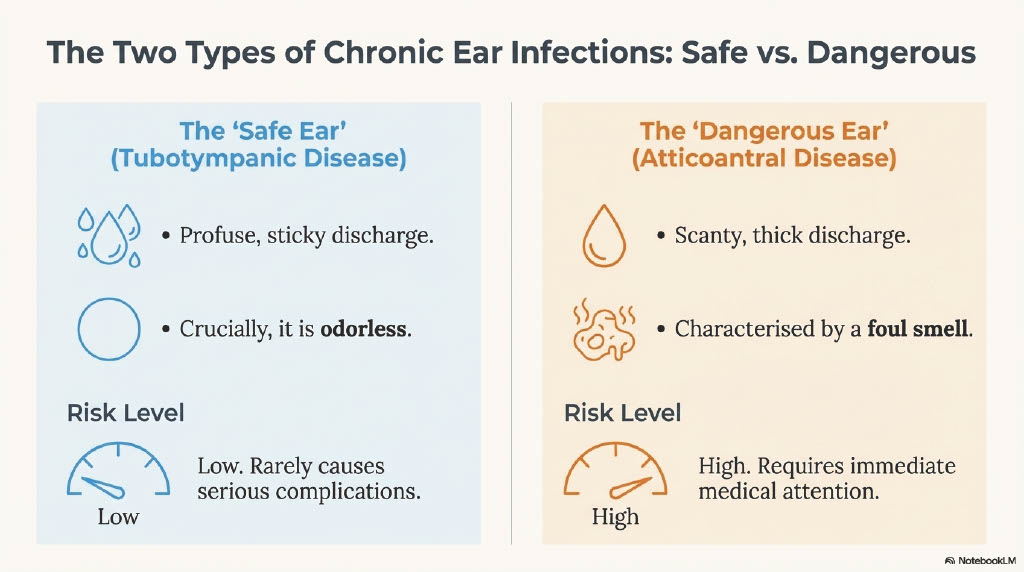
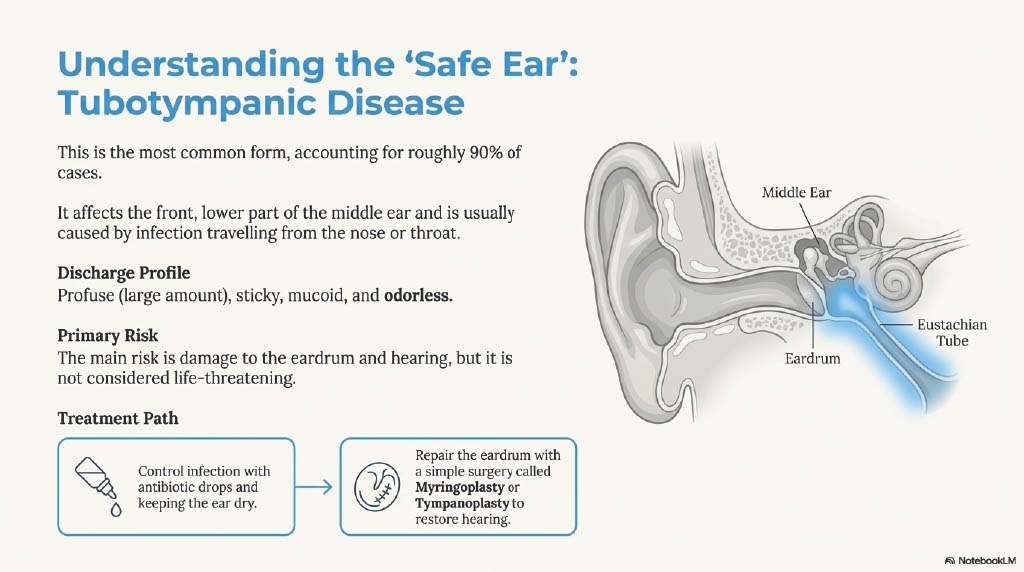
Chronic Ear Infections (Chronic Suppurative Otitis Media, CSOM)
A long-standing infection can damage the middle ear bones (conductive component) while bacterial toxins seep into the inner ear and damage hair cells (sensorineural component).
Advanced Otosclerosis
While initially conductive, abnormal bone growth can eventually spread into the cochlea, causing cochlear damage and sensorineural loss on top of the stapes fixation.
Head Trauma
A severe injury might cause a skull fracture that destroys the cochlea while simultaneously rupturing the eardrum or dislocating ossicles.
How Your Hearing is Tested
To determine which type of loss you have and its severity, a specialist will perform several tests. At Prime ENT Center Hardoi, Dr. Prateek Porwal and Dr. Harshita Singh use a systematic approach combining office tests and formal audiology evaluations.
Office-Based Tests
Whispered Voice Test
A quick screening performed in the office. The examiner whispers words at a standardized distance; if the patient cannot repeat them, hearing loss is suspected.
Rinne Test
Using a 512 Hz tuning fork, the examiner compares how well you hear sound through the air versus through bone (by placing the fork on the mastoid bone behind the ear).
- Normal/Positive Rinne: Air conduction is louder than bone conduction (AC > BC)
- Negative Rinne (suggestive of conductive loss): Bone conduction is equal to or louder than air conduction (BC ≥ AC)
Weber Test
The tuning fork is placed in the middle of your forehead to see if the sound is heard better in one ear than the other (lateralization).
- Normal Weber: Sound is heard equally in both ears (midline)
- Weber lateralizes to affected ear: Suggests conductive loss on that side (the affected ear “hears” better via bone)
- Weber lateralizes to better ear: Suggests sensorineural loss in the opposite ear (the better-functioning ear perceives the vibration)
Formal Audiology Tests
Pure Tone Audiometry (PTA)
You wear headphones and press a button when you hear various pitches (frequencies) at different volumes. This produces an audiogram, a graph showing your hearing thresholds at each frequency. Audiogram interpretation reveals:
- Normal hearing: 0-25 dB
- Mild loss: 26-40 dB
- Moderate loss: 41-55 dB
- Moderately severe: 56-70 dB
- Severe: 71-90 dB
- Profound: ≥91 dB
Speech Audiometry
This measures not just the volume you can hear, but how clearly you understand words. Speech discrimination scores are critical for predicting hearing aid benefit.
Tympanometry
This test measures how well your eardrum moves by changing the air pressure in your ear canal.
- Type A tympanogram: Normal middle ear pressure and compliance (indicates normal function)
- Type B tympanogram: Flat curve with reduced compliance—indicates fluid, perforation, or canal obstruction
- Type C tympanogram: Normal compliance but negative peak pressure—suggests blocked Eustachian tube
- Type As tympanogram: Reduced compliance with normal pressure—suggests ossicular fixation (as in otosclerosis)
- Type Ad tympanogram: Increased compliance—suggests ossicular discontinuity
The combination of a large gradient (>150 daPa) and low compliance (<0.2 cc) has a 95% or greater likelihood of middle ear effusion.
Acoustic Reflex Testing
The presence or absence of acoustic reflexes can help localize lesions and differentiate conductive from retrocochlear pathology.
Imaging
Computed Tomography (CT) of the Temporal Bone
Indicated when ossicular chain damage, otosclerosis, or bony abnormalities are suspected. Provides excellent bony detail.
Magnetic Resonance Imaging (MRI)
Indicated for asymmetrical or sudden sensorineural hearing loss to rule out acoustic neuroma or other retrocochlear pathology. Superior soft-tissue detail and no radiation.
Management and Treatment Options
Modern medicine offers several evidence-based ways to help patients with hearing loss, ranging from simple medical interventions to sophisticated technology and surgery.
Medical Management
Cerumen Removal
Impacted earwax can be removed by irrigation or curettage—often providing immediate, complete restoration of hearing.
Antibiotic/Anti-inflammatory Therapy
Infections like otitis externa or acute otitis media are treated with topical or systemic medications.
Corticosteroids
Used in sudden sensorineural hearing loss, some forms of autoimmune inner ear disease, and Menière’s disease to reduce inflammation and improve outcomes.
Amplification Devices
Conventional Hearing Aids
Small electronic devices that amplify sound. Modern digital aids are programmable and can be adjusted to amplify only the frequencies you are missing, providing a more natural listening experience. Hearing aids are most effective for mild to moderate conductive and sensorineural losses.
Bone-Anchored Hearing Aids (BAHA)
For those with conductive hearing loss who cannot wear traditional air-conduction hearing aids (due to canal problems, chronic drainage, or atresia), a BAHA transmits sound directly to the mastoid bone via bone conduction. Studies show:
- Success rates: 90-99.3%
- Mean functional gain: 29 dB
- Patient satisfaction: 89% prefer BAHA over air-conduction aids
- Daily use: 72% use for more than 4 hours
Cochlear Implants (CI)
For profound sensorineural loss where hearing aids provide insufficient benefit, cochlear implants are surgically implanted to bypass the damaged inner ear and stimulate the auditory nerve directly. Results are dramatic:
- Speech perception improvement: 8.2% pre-implant to 53.9% post-implant
- 82% of postlingual adults improve speech perception by ≥15 percentage points
- Long-term hearing stability maintained even after 5+ years of use
Surgical Interventions
Myringoplasty (Tympanic Membrane Repair)
For perforations that do not heal spontaneously, this outpatient procedure grafts tissue to repair the eardrum.
- Mean air-conduction hearing gain: 22.37 dB
- Mean air-bone gap reduction: 20.73 dB
- Graft uptake success rate: 97.37%
Stapedotomy (Stapes Replacement)
For otosclerosis, where the stapes bone is fixed, this procedure replaces the fixed stapes with a prosthesis.
- 94.4% achieve hearing improvement
- 61.1% achieve complete air-bone gap closure
- 85.2% achieve closure to within 20 dB
- Mean hearing gain: 23.38 ± 12.37 dB
- Complication rate: 13% (mostly minor)
Tympanoplasty
Surgical repair of the middle ear for chronic infections or ossicular issues.
Mastoidectomy
For severe or chronic ear infections affecting the mastoid bone.
Endolymphatic Sac Decompression or Gentamicin Injection
For severe Menière’s disease refractory to medical management.
When to Seek Immediate Care
Red flags that warrant urgent evaluation at Prime ENT Center Hardoi include:
- Sudden hearing loss (30+ dB within 72 hours) in one ear
- Unilateral hearing loss with tinnitus (risk of acoustic neuroma)
- Hearing loss following head trauma or ear trauma
- Progressive hearing loss with balance problems
- Clear or watery discharge from one ear (possible CSF leak)
- Severe ear pain with fever and hearing loss (possible infection)
- Persistent ear discharge with foul odor despite treatment
The “Radio System” Analogy
To understand the different types of hearing loss, imagine your hearing is like a home radio system. Conductive hearing loss is like having a clogged speaker mesh or loose wire outside the radio; the music is playing perfectly inside, but the sound is muffled and cannot get out into the room. A simple cleaning or rewiring (medical treatment or surgery) can restore the music.
Sensorineural hearing loss is like damage to the internal components or the processor of the radio; the signal might be getting to the unit just fine, but the radio can no longer translate it into clear music, resulting in static or silence. In this case, you need an amplifier (hearing aid) or a new internal mechanism (cochlear implant).
Mixed hearing loss is when you have both: a loose wire and a broken processor. Your doctor’s job is to figure out if you need a “new wire” (surgery for conduction) or an “internal repair” (a hearing aid or implant for the sensory components).
Conclusion and Next Steps
Hearing loss is highly prevalent—affecting 6.3% of India’s population—yet often goes untreated due to stigma or lack of awareness. However, modern diagnostic methods and treatment options can significantly improve quality of life.
If you or a family member experiences hearing difficulties, the first step is a comprehensive evaluation at a specialist clinic like Prime ENT Center Hardoi. Dr. Prateek Porwal and Dr. Harshita Singh offer state-of-the-art diagnostic testing (audiometry, tympanometry, imaging) and personalized treatment plans, from cerumen removal and medications to hearing aids, bone-anchored devices, and cochlear implants.
Do not wait. Early diagnosis and intervention prevent further deterioration and allow access to rehabilitation services. Visit Prime ENT Center Hardoi today for your hearing evaluation.
HINGLISH VERSION: Apni Suni Ko Samajhna – Suni Nuksaan ke Prakar
Bhoomika: Suni Kyun Zaroori Hai
Suni manushya ke sabse complex aur skilled indriyaan mein se ek hai. Yeh hamein communicate karne, apne aas-paas dekhne-sunne, aur ek achcha jeevan jeene mein madad karta hai. Lekin jab yeh system kharab ho jata hai, toh suni nuksaan (hearing loss) ya bahra-pan (deafness) ho sakta hai. Bharat mein, lagbhag 63 million (6.3%) log significant suni nuksaan se suffer karte hain. 4 ek har 1,000 bacchon mein severe ya profound hearing loss hota hai.
Prime ENT Center Hardoi mein Dr. Prateek Porwal aur Dr. Harshita Singh har umar ke patients ko dekha karte hain jo suni mein problem face karte hain. Medical experts ne suni nuksaan ko teeno prakar mein divide kiya hai: conductive, sensorineural, aur mixed. Inhe samajhna—inke karan, lakshan, aur ilaj—yeh pehla step hai ek better hearing life ke liye.
Kaan Ka Anatomy: Sound Kaise Travel Karta Hai
Suni samjhne ke liye pehle humko pata hona chahiye ke kaan kaise kaam karta hai. Kaan ke teen hisse hote hain, aur kisi bhi hisse mein problem se different type ke hearing loss ho sakte hain.
Bahri Kaan (External Ear)
Isme pinna (visible outer part) aur ear canal hote hain. Inka kaam sound ko gather karke eardrum tak pahunchana hota hai. Agar wax, foreign object, ya infection se blocking ho, toh sound nahi ja sakta.
Beech Ka Kaan (Middle Ear)
Isme eardrum (tympanic membrane) aur teeno chhoti bones (ossicles) hote hain—malleus, incus, aur stapes. Ye bones sound vibrations ko amplify karke (badha ke) inner ear tak bhejte hain. Iska kaam bahut important hai kyunki bina iska sound 30 decibels kamzor ho jata hai.
Andar Ka Kaan (Inner Ear)
Isme cochlea (snail ke shape ka organ) hota hai jo fluid se bhara hota hai. Isme thousands of hair cells (stereocilia) hote hain jo mechanical vibrations ko electrical signals mein badal dete hain. ये signals auditory nerve ke through brain tak jate hain.
Prakar 1: Conductive Hearing Loss (Mechanical Problem)
Conductive hearing loss tab hota hai jab sound ko mechanical problem ke wajah se kaan tak nahi pahunch pata. Isme inner ear bilkul normal hota hai, bas sound bahar se andar nahi aa pata.
External Ear Mein Common Causes
Kaan ke Maal (Cerumen Impaction)
Kaan mein wax jama ho jana sabse common aur easily treatable problem hai. Complete blockage se 50 decibels tak hearing loss ho sakta hai. Older people aur jo narrow ear canal hote hain unhe ye problem zyada hota hai.
Chhoti Cheezein (Foreign Bodies)
Bacche aksar kaan mein beads, seeds, ya buttons dal dete hain jo blocking karti hain. ENT specialist ko dekhaना zaroori hota hai.
Kaan Mein Infection (Otitis Externa)
Kaan ke canal mein swelling se hearing muffled ho sakti hai. Swimmers ko zyada hota hai. Usually antibiotics se theek ho jata hai.
Haddi Ki Growth
Kuch log mein bone ke extra growth se canal block ho sakta hai. Agar hearing significantly affect ho rahi hai toh surgery ki zarurat pad sakti hai.
Middle Ear Mein Common Causes
Kaan Mein Paani (Otitis Media with Effusion – OME)
Bachhon mein sabse common cause. Eardrum ke peeche paani jama ho jata hai jo vibration block karti hai. Aksar treatment nahi chahiye aur khud theek ho jata hai, lekin persistent cases mein tubes laga sakte hain.
Eardrum Mein Hole (Perforation)
Infection, trauma, ya loud blast se hole ho sakta hai. Aksar khud theek ho jata hai par bade holes ko surgery (myringoplasty) se theek karna padta hai.
Otosclerosis
Ye ek hereditary condition hai jisme stapes bone fix ho jata hai abnormal bone growth se. Ye condition 30-50 age mein hota hai. Stapedotomy surgery se 90% success rate hoti hai!
Bone Ka Chain Toot Jana
Severe head trauma se yeh ho sakta hai. Surgery se theek karna padta hai.
Prakar 2: Sensorineural Hearing Loss (Permanent Damage)
Sensorineural hearing loss (SNHL) zyada common aur permanent hota hai. Inner ear ya auditory nerve mein damage se hota hai.
Cochlear (Sensory) Causes
Umar Se Related Suni Nuksaan (Presbycusis)
Umar badhne ke saath natural taur par suni kamzor hoti hai. Ye dono kaan mein equal taur par hota hai aur high-frequency sound se shuru hota hai. Kitaab padhne ya noisy jagah par samajhne mein problem hoti hai. 60+ saal se zyada log ko ye problem hoti hai. Ye multifactorial hota hai—genetics, stress, noise, vascular changes.
Loud Noise Se Nuksan (Noise-Induced Hearing Loss)
Factory mein kaam karne wale, construction sites par, ya concerts mein jaane wale logon ko ye problem hoti hai. Cochlea ke hair cells permanently damage ho jate hain. 85 dB se zyada sound harmful hota hai.
Medicines Ka Nuksan (Ototoxicity)
Kuch antibiotics, chemotherapy drugs, ya heavy aspirin dose se inner ear damage ho sakta hai. Isko medicines band karte hi rokा जा सकता है।
Menière’s Disease
Ye ek condition hai jisme severe dizziness (vertigo), ringing in ear (tinnitus), aur hearing loss—teeno milke aate hain. Episodes 20 minutes se kuch hours tak chal sakte hain. Inner ear mein fluid pressure zyada ho jata hai. Ye diagnosis mostly symptoms se lagaya जाता है।
Neural (Retrocochlear) Causes
Kaan ka종양 (Acoustic Neuroma)
Ye ek benign tumor hota hai auditory nerve par jo bilkul slow grow karta hai. Ek taraf se hearing loss, tinnitus, aur balance problem hote hain. Isko rule out karna zaroori hai. MRI scan se diagnose karte hain.
Auditory Neuropathy
Hair cells theek kaam karte hain par signals brain tak sahi taur par nahi pahunchte. Patient kah sakte hain: “Sun to raha hoon par samaj nahi aa raha.”
Multiple Sclerosis
Ye nerve pathway ko damage karta hai aur hearing suddenly ya gradually kamzor ho sakti hai.
Prakar 3: Mixed Hearing Loss
Mixed loss = Conductive + Sensorineural (dono problem ek saath)
Examples
Chronic Ear Infection (CSOM)
Long-standing infection se middle ear bones damage (conductive) + inner ear cells damage (sensorineural) dono ho सकते हैं।
Advanced Otosclerosis
Shuru mein sirf stapes fix hota hai (conductive) lekin baad mein cochlea tak spread ho सकता है (sensorineural bhi hota है)।
Suni Test Kaise Hote Hain
Prime ENT Center Hardoi mein detailed tests ke through hearing problem diagnose kiya जाता है।
Office Tests
Rinne Test
512 Hz tuning fork use करके air conduction vs bone conduction compare karte हैं। Agar air > bone normal hota है। Agar bone > air, to conductive loss suggest karta है।
Weber Test
Forehead ke middle mein tuning fork rakh के check करते हैं कि sound equally सुनाई दे रहा है या एक कान मेinformacion ज्यादा। Asymmetry से loss की location malum चलती है।
Formal Tests
Pure Tone Audiometry (PTA)
Headphones पहन के different frequencies सुनते हैं। Audiogram बनता है जो graph की तरह दिखता है। इससे normal (0-25 dB), mild (26-40), moderate (41-55), severe (71-90), profound (≥91 dB) level पता चलता है।
Tympanometry
Eardrum की movement को measure करता है। Type A = normal, Type B = fluid, etc.
Ilaj (Treatment) Ke Options
Medical Treatment hearing loss types
Wax Nikalna
Cerumen impaction को simply nirge ya irrigation से remove कर सकते हैं। तुरंत सुनाई देने लगता है।
Antibiotics
Infection को treat करने के लिए।
Steroids
Sudden hearing loss या Menière’s disease में inflammation कम करने के लिए।
Hearing Devices
Conventional Hearing Aids
Digital aids जो programmable होते हैं। Mild से moderate loss के लिए अच्छे हैं।
BAHA (Bone-Anchored Hearing Aid)
Conductive loss वाले और जिन्हें traditional aids नहीं लगा सकते उनके लिए। Bone conduction से काम करता है।
- 90-99% success rate
- Mean 29 dB functional gain
- 89% patient satisfaction
Cochlear Implant (CI)
Profound sensorineural loss के लिए। Surgically implant होता है।
- Speech perception improvement: 8.2% से 53.9%
- 82% patients में 15+ percentage points improvement
- Long-term stable results
Surgical Treatment
Myringoplasty
Eardrum को repair करना। 22-23 dB average hearing gain होता है।
Stapedotomy
Otosclerosis का surgical treatment।
- 94% में hearing improvement
- 61% में complete gap closure
- 85% में 20 dB के andar gap closure
जब तुरंत Doctor Dekhna Chahiye
- Sudden hearing loss एक कान में 72 घंटे में
- One-sided hearing loss with tinnitus (tumor risk)
- Head trauma के बाद hearing loss
- Foul-smelling discharge एक कान से
- Balance problem के साथ hearing loss
Conclusion
अगर आपको या आपके family को सुनने में समस्या है, तो Prime ENT Center Hardoi मेें Dr. Prateek Porwal और Dr. Harshita Singh को मिलिए। Modern diagnostic tests से सटीक diagnosis होती है और आजके आधुनिक उपचार से quality of life में dramatically सुधार आता है।
आज ही appointment लें!
HINDI VERSION: अपनी सुनी को समझना – सुनने में नुकसान के प्रकार
परिचय: सुनना क्यों महत्वपूर्ण है
सुनना मानव की सबसे जटिल और कुशल इंद्रियों में से एक है। यह हमें संवाद करने, अपने आसपास की दुनिया को समझने, और एक उच्च गुणवत्ता का जीवन जीने में मदद करता है। लेकिन जब यह प्रणाली बाधित हो जाती है, तो श्रवण नुकसान (hearing loss) या बहरापन (deafness) हो सकता है। भारत में, लगभग 63 मिलियन (6.3%) लोग महत्वपूर्ण श्रवण हानि से पीड़ित हैं। हर 1,000 बच्चों में 4 गंभीर या गहन श्रवण नुकसान के साथ पैदा होते हैं।
Prime ENT Center Hardoi में, Dr. Prateek Porwal और Dr. Harshita Singh सभी उम्र के रोगियों का इलाज करते हैं जो सुनने की समस्याओं का सामना कर रहे हैं। चिकित्सा विशेषज्ञों ने श्रवण नुकसान को तीन मुख्य प्रकारों में वर्गीकृत किया है: संवहनी (conductive), संवेदनशील (sensorineural), और मिश्रित (mixed)। इन्हें समझना—उनके कारण, लक्षण, और प्रबंधन—बेहतर सुनने के जीवन की ओर पहला कदम है।
कान की संरचना: ध्वनि कैसे यात्रा करती है
सुनने को समझने के लिए, हमें पहले समझना चाहिए कि कान कैसे काम करता है। कान के तीन मुख्य भाग होते हैं, और किसी भी भाग में समस्या से विभिन्न प्रकार के श्रवण नुकसान हो सकते हैं।
बाहरी कान (External Ear)
इसमें पिना (दृश्यमान बाहरी भाग) और बाहरी श्रवण नहर (external auditory canal) शामिल हैं। इसका मुख्य काम ध्वनि को एकत्र करके कान के पर्दे (eardrum) तक निर्देशित करना है। मोम, विदेशी वस्तुओं, या संक्रमण से कोई भी रुकावट ध्वनि को आंतरिक कान तक पहुंचने से रोक सकती है।
मध्य कान (Middle Ear)
इसमें कान का पर्दा (tympanic membrane/eardrum) और तीन छोटी हड्डियां (ossicles) शामिल हैं—मैलियस, इनकस, और स्टेपीज। ये हड्डियां ध्वनि कंपन को 30 डेसिबल तक प्रवर्धित करती हैं और उन्हें द्रव से भरे आंतरिक कान तक स्थानांतरित करती हैं।
आंतरिक कान (Inner Ear)
यहां का मुख्य अंग कोक्लिया है—एक घोंघे के आकार की संरचना जो द्रव से भरी होती है। इसमें हजारों सूक्ष्म बाल कोशिकाएं (hair cells/stereocilia) होती हैं जो यांत्रिक कंपन को विद्युत संकेतों में परिवर्तित करती हैं। ये संकेत श्रवण तंत्रिका के माध्यम से मस्तिष्क तक पहुंचते हैं, जहां ध्वनि की व्याख्या होती है।
प्रकार 1: संवहनी श्रवण नुकसान (Conductive Hearing Loss)
संवहनी श्रवण नुकसान तब होता है जब यांत्रिक प्रणाली जो ध्वनि को बाहर से आंतरिक कान तक संचालित करती है, विफल हो जाती है। इन मामलों में, आंतरिक कान और श्रवण तंत्रिका अक्सर पूरी तरह स्वस्थ होती हैं, लेकिन ध्वनि उन तक नहीं पहुंच सकती।
बाहरी कान में सामान्य कारण
कान की मोम (Cerumen Impaction)
कड़ी मोम का जमाव सबसे आम और आसानी से इलाज योग्य कारण है। कान की नहर का पूर्ण अवरोध 50 डेसिबल तक सुनने का नुकसान कर सकता है। बुजुर्ग लोगों और संकीर्ण कान नहर वाले लोगों को यह समस्या अधिक होती है।
विदेशी वस्तुएं (Foreign Bodies)
बच्चे विशेष रूप से कान में मोतियां, बीज, या बटन डाल सकते हैं। ENT विशेषज्ञ द्वारा सावधानी से हटाया जाना चाहिए।
कान नहर का संक्रमण (Otitis Externa)
संक्रमण के कारण कान नहर की सूजन से सुनने में कमी आती है। तैराकों में यह अधिक आम है। आमतौर पर सामयिक एंटीबायोटिक्स से ठीक हो जाता है।
हड्डी की वृद्धि (Exostoses/Osteomas)
कुछ लोगों में हड्डी की अतिरिक्त वृद्धि से नहर अवरुद्ध हो सकता है। यदि सुनने को महत्वपूर्ण रूप से प्रभावित कर रहा है, तो सर्जरी की आवश्यकता हो सकती है।
मध्य कान में सामान्य कारण
कान में द्रव (Otitis Media with Effusion – OME)
बच्चों में सबसे आम कारण। कान के पर्दे के पीछे गाढ़ा द्रव जमा हो जाता है जो कंपन को रोकता है। अक्सर उपचार की आवश्यकता नहीं होती और यह अपने आप ठीक हो जाता है, लेकिन दीर्घस्थायी मामलों में वेंटिलेशन ट्यूब लगानी पड़ सकती है।
कान के पर्दे में छिद्र (Perforation)
संक्रमण, आघात (जैसे कान पर तमाचा), या तेज विस्फोट से छिद्र हो सकता है। कई छिद्र अपने आप ठीक हो जाते हैं, लेकिन बड़े अथवा न भरने वाले छिद्रों के लिए मीरिंगोप्लास्टी (myringoplasty) सर्जरी की आवश्यकता होती है।
ओटोस्क्लेरोसिस (Otosclerosis)
यह एक आनुवंशिक स्थिति है जिसमें स्टेपीज हड्डी असामान्य हड्डी की वृद्धि से जकड़ी हुई रहती है। हड्डी हिल नहीं सकती, इसलिए यह ध्वनि कंपन को आंतरिक कान तक नहीं भेज सकती। आमतौर पर 30-50 वर्ष की आयु में प्रस्तुत होता है। स्टेपेडोटमी (stapedotomy) सर्जरी से 90% से अधिक सफलता दर होती है!
हड्डी की श्रृंखला का विस्थापन (Ossicular Dislocation)
गंभीर सिर के आघात से यह हो सकता है। सर्जरी द्वारा मरम्मत की आवश्यकता होती है।
संवहनी श्रवण नुकसान अक्सर चिकित्सा हस्तक्षेप या सर्जरी के माध्यम से उलट सकता है या इलाज योग्य है। Prime ENT Center Hardoi में, Dr. Prateek Porwal और Dr. Harshita Singh इन स्थितियों का नियमित रूप से निदान और प्रबंधन करते हैं।
प्रकार 2: संवेदनशील श्रवण नुकसान (Sensorineural Hearing Loss)
संवेदनशील श्रवण नुकसान (SNHL) सबसे आम स्थायी रूप है जो सभी श्रवण हानि का बहुमत हिस्सा है। यह कोक्लिया में संवेदनशील कोशिकाओं या श्रवण तंत्रिका पथ को नुकसान से होता है।
कोक्लिया (Sensory) संबंधी कारण
आयु-संबंधी श्रवण नुकसान (Presbycusis)
उम्र बढ़ने के साथ सुनने में प्राकृतिक रूप से गिरावट आती है। यह आमतौर पर दोनों कानों को समान रूप से प्रभावित करता है और उच्च-आवृत्ति ध्वनियों से शुरू होता है। 60 वर्ष से अधिक आयु के लोग प्रभावित होते हैं। यह बहु-कारक है—आनुवंशिकता, तनाव, शोर, संचार संबंधी परिवर्तन।
शोर से प्रेरित श्रवण नुकसान (Noise-Induced Hearing Loss)
कारखाने में काम करने वाले, निर्माण स्थलों पर, या संगीत कार्यक्रमों में काम करने वाले लोग इससे प्रभावित हो सकते हैं। 85 डेसिबल से अधिक ध्वनि हानिकारक है और कोक्लिया की बाल कोशिकाओं को स्थायी रूप से नष्ट कर सकती है।
दवाओं की विषाक्तता (Ototoxicity)
कुछ एंटीबायोटिक्स, कीमोथेरेपी दवाएं, या उच्च-खुराक एस्पिरिन आंतरिक कान को नुकसान पहुंचा सकते हैं। दवा बंद करने से इसे रोका जा सकता है।
मेनिएर रोग (Menière’s Disease)
यह एक ऐसी स्थिति है जिसमें गंभीर चक्कर (vertigo), कान में बजना (tinnitus), और श्रवण नुकसान—तीनों साथ आते हैं। एपिसोड 20 मिनट से कुछ घंटों तक चल सकते हैं। आंतरिक कान में द्रव दबाव बढ़ता है। यह निदान आमतौर पर लक्षणों के पैटर्न से किया जाता है।
तंत्रिका (Retrocochlear) संबंधी कारण
एकोस्टिक न्यूरोमा (Acoustic Neuroma/Vestibular Schwannoma)
यह श्रवण तंत्रिका पर एक सौम्य ट्यूमर है जो बहुत धीरे बढ़ता है। एक-तरफा श्रवण नुकसान, कान में बजना, और संतुलन समस्याएं होती हैं। यह रोग का निदान बाहर निकालने के लिए MRI स्कैन आवश्यक है।
श्रवण तंत्रिका रोग (Auditory Neuropathy)
बाल कोशिकाएं सही तरीके से काम करती हैं लेकिन संकेत मस्तिष्क तक सही तरीके से नहीं पहुंचते। रोगी कह सकते हैं: “सुन तो रहा हूं लेकिन समझ नहीं आ रहा।”
मल्टीपल स्क्लेरोसिस (Multiple Sclerosis)
यह तंत्रिका पथ को नुकसान पहुंचाता है और सुनना अचानक या धीरे-धीरे कमजोर हो सकता है।
प्रकार 3: मिश्रित श्रवण नुकसान (Mixed Hearing Loss)
मिश्रित नुकसान = संवहनी + संवेदनशील (दोनों समस्याएं एक साथ)
उदाहरण
क्रॉनिक कान संक्रमण (Chronic Suppurative Otitis Media – CSOM)
लंबे समय के संक्रमण से मध्य कान की हड्डियों को नुकसान (संवहनी) और आंतरिक कान की कोशिकाओं को नुकसान (संवेदनशील) दोनों हो सकते हैं।
उन्नत ओटोस्क्लेरोसिस
शुरुआत में केवल स्टेपीज जकड़ा जाता है (संवहनी), लेकिन बाद में कोक्लिया तक फैल सकता है (संवेदनशील भी हो जाता है)।
आपकी सुनी का परीक्षण कैसे किया जाता है
Prime ENT Center Hardoi में, Dr. Prateek Porwal और Dr. Harshita Singh व्यवस्थित दृष्टिकोण का उपयोग करते हैं।
कार्यालय परीक्षण
फुसफुसाते कण्ठ परीक्षण (Whispered Voice Test)
परीक्षक एक मानकीकृत दूरी पर फुसफुसाते हुए शब्द बोलता है। यदि रोगी उन्हें दोहरा नहीं सकते, तो श्रवण नुकसान का संदेह है।
रिन्ने परीक्षण (Rinne Test)
512 Hz ट्यूनिंग फोर्क का उपयोग करते हुए, परीक्षक वायु चालन बनाम हड्डी चालन की तुलना करता है।
- सामान्य/सकारात्मक रिन्ने: वायु चालन > हड्डी चालन (AC > BC)
- नकारात्मक रिन्ने: हड्डी चालन ≥ वायु चालन (BC ≥ AC) — संवहनी नुकसान का सुझाव देता है
वेबर परीक्षण (Weber Test)
ट्यूनिंग फोर्क को माथे के बीच में रखा जाता है।
- सामान्य वेबर: ध्वनि दोनों कानों में समान रूप से सुनाई देती है
- वेबर प्रभावित कान की ओर विचलित होता है: संवहनी नुकसान सुझाता है
- वेबर बेहतर कान की ओर विचलित होता है: संवेदनशील नुकसान सुझाता है
औपचारिक श्रवण परीक्षण
शुद्ध टोन ऑडीओमेट्री (Pure Tone Audiometry – PTA)
आप हेडफोन पहनते हैं और विभिन्न पिचों (आवृत्तियों) और वॉल्यूम में ध्वनि सुनते हैं। यह एक ऑडीओग्राम बनाता है जो ग्राफ जैसा दिखता है।
- सामान्य सुनना: 0-25 dB
- हल्का नुकसान: 26-40 dB
- मध्यम नुकसान: 41-55 dB
- गंभीर: 71-90 dB
- गहन: ≥91 dB
वाक श्रवण परीक्षण (Speech Audiometry)
यह न केवल आप कितना जोर से सुन सकते हैं, बल्कि आप शब्दों को कितनी स्पष्टता से समझते हैं इसे मापता है।
टाइम्पेनोमेट्री (Tympanometry)
यह कान नहर में वायु दबाव बदलकर कान के पर्दे की गति को मापता है।
- Type A: सामान्य मध्य कान दबाव और अनुपालन
- Type B: सपाट वक्र—द्रव, छिद्र, या बाधा का संकेत
- Type C: नकारात्मक दबाव—यूस्टेशियन ट्यूब बाधा का संकेत
- Type As: कम अनुपालन—हड्डी जकड़ी हुई (ओटोस्क्लेरोसिस)
प्रबंधन और उपचार विकल्प
चिकित्सीय प्रबंधन
मोम हटाना
अवरुद्ध कानों की मोम को सिंचाई या यांत्रिक हटाने से तुरंत सुनना पुनः स्थापित हो सकता है।
एंटीबायोटिक/विरोधी-भड़काऊ चिकित्सा
संक्रमणों का इलाज किया जाता है।
कॉर्टिकोस्टेरॉयड्स
अचानक संवेदनशील नुकसान, कुछ ऑटोइम्यून आंतरिक कान रोग, और मेनिएर रोग में उपयोग किया जाता है।
प्रवर्धन उपकरण
पारंपरिक श्रवण सहायक (Conventional Hearing Aids)
आधुनिक डिजिटल उपकरण प्रोग्राम योग्य हैं और केवल आप जो आवृत्तियां खो रहे हैं उसे बढ़ाते हैं। हल्के से मध्यम नुकसान के लिए प्रभावी।
हड्डी-निहित श्रवण सहायक (Bone-Anchored Hearing Aid – BAHA)
संवहनी नुकसान वाले जो पारंपरिक उपकरण नहीं लगा सकते। हड्डी चालन के माध्यम से काम करता है।
- सफलता दर: 90-99.3%
- औसत कार्यात्मक लाभ: 29 dB
- रोगी संतुष्टि: 89%
कोक्लियर इम्प्लांट (Cochlear Implant – CI)
गहन संवेदनशील नुकसान के लिए। सर्जिकल रूप से प्रत्यारोपित होता है।
- वाक धारणा सुधार: 8.2% से 53.9%
- 82% वयस्कों में 15+ प्रतिशत अंकों का सुधार
- दीर्घकालीन स्थिर परिणाम
सर्जिकल हस्तक्षेप
मीरिंगोप्लास्टी (Tympanoplasty)
कान के पर्दे की मरम्मत।
- औसत वायु-चालन लाभ: 22.37 dB
- औसत अंतराल में कमी: 20.73 dB
- ग्राफ्ट सफलता: 97.37%
स्टेपेडोटमी (Stapedotomy)
ओटोस्क्लेरोसिस का सर्जिकल उपचार।
- 94.4% में श्रवण सुधार
- 61.1% में पूर्ण अंतराल बंद होना
- औसत लाभ: 23.38 ± 12.37 dB
तुरंत चिकित्सक से मिलने के समय (Red Flags)
- एक कान में अचानक श्रवण नुकसान (72 घंटे में 30+ dB)
- एक-तरफा नुकसान कान में बजने के साथ (ट्यूमर जोखिम)
- सिर के आघात के बाद श्रवण नुकसान
- संतुलन समस्याएं श्रवण नुकसान के साथ
- एक कान से स्पष्ट या पानी जैसा निर्वहन (CSF रिसाव संभव)
- तेज सिरदर्द कान दर्द और श्रवण नुकसान के साथ
निष्कर्ष और अगले कदम
श्रवण नुकसान भारत की 6.3% आबादी को प्रभावित करता है, लेकिन अक्सर कलंक या जागरूकता की कमी के कारण इलाज नहीं किया जाता है। हालांकि, आधुनिक निदान और उपचार विकल्प जीवन की गुणवत्ता में नाटकीय सुधार ला सकते हैं।
यदि आपको या आपके परिवार के किसी सदस्य को सुनने में कठिनाई है, तो Prime ENT Center Hardoi में Dr. Prateek Porwal और Dr. Harshita Singh से मिलिए। अत्याधुनिक निदान परीक्षण (ऑडीओमेट्री, टाइम्पेनोमेट्री, इमेजिंग) और व्यक्तिगत उपचार योजनाएं व्यक्तिगत सुनने की आवश्यकताओं के अनुसार तैयार की जाती हैं।
आज ही अपॉइंटमेंट लें!
FAQs
ENGLISH FAQS – Hearing Loss Types & Management (20 Questions)
1. Q: What is the most common type of hearing loss?
A: Sensorineural hearing loss (SNHL) is the most common type and accounts for the majority of all hearing loss cases. Age-related hearing loss (presbycusis) is the most prevalent form of SNHL, affecting approximately 35-50% of people over age 60, especially in high-frequency sounds that make speech difficult in noisy environments.
2. Q: How can conductive hearing loss be reversed?
A: Many conductive causes are reversible through simple medical or surgical intervention. Cerumen impaction is removed by irrigation or curettage with immediate hearing restoration. Perforations may heal spontaneously or require myringoplasty (surgical repair), with 97% graft success rates. Otosclerosis is corrected by stapedotomy surgery with >90% successful outcomes, achieving complete air-bone gap closure in 61% of patients.
3. Q: What is Menière’s disease and how does it cause hearing loss?
A: Menière’s disease is an inner ear disorder characterized by recurrent episodes of vertigo (severe dizziness), tinnitus (ringing), aural fullness, and fluctuating low-frequency hearing loss lasting 20 minutes to 24 hours. It is thought to result from increased endolymphatic fluid pressure in the inner ear. Repeated episodes of high pressure and sudden release damage the delicate cochlear structures, causing progressive permanent hearing loss over time. Diagnosis is clinical, based on characteristic symptom patterns.
4. Q: How is sudden sensorineural hearing loss treated?
A: Sudden sensorineural hearing loss (loss of ≥30 dB within 72 hours) is a medical emergency requiring urgent evaluation by an ENT specialist like those at Prime ENT Center Hardoi. Treatment typically involves high-dose corticosteroids initiated within 2 weeks of onset to reduce inflammation. Some specialists may add antivirals. Imaging (MRI/CT) is warranted to rule out retrocochlear pathology such as acoustic neuroma. Early intervention significantly improves recovery outcomes.
5. Q: What causes age-related hearing loss (presbycusis)?
A: Presbycusis is multifactorial, involving genetic factors (35-55% heritability), oxidative stress, cochlear vascular changes, and cumulative environmental factors including lifetime noise exposure, tobacco use, and alcohol consumption. It typically begins with loss of high-frequency sounds, making it difficult to understand speech in background noise. Unlike conductive loss, presbycusis is permanent and cannot be reversed, but hearing aids provide significant benefit.
6. Q: When should hearing aids be fitted versus when are cochlear implants indicated?
A: Conventional hearing aids are most effective for mild to moderate conductive or sensorineural hearing loss. They are fitted by audiologists after formal audiometry. Cochlear implants are reserved for severe-to-profound sensorineural loss where hearing aids provide insufficient benefit. CI outcomes are dramatic: speech perception improves from 8.2% pre-implant to 53.9% post-implant, with 82% of postlingual adults achieving ≥15 percentage point improvements.
7. Q: What is a bone-anchored hearing aid (BAHA) and when is it used?
A: A BAHA is a bone-conduction device used for patients with conductive or mixed hearing loss who cannot wear traditional air-conduction hearing aids (due to chronic ear drainage, aural atresia, or canal obstruction). The device surgically implants onto the mastoid bone and transmits sound via direct bone vibration, bypassing the outer and middle ear. Success rates range 90-99.3%, with mean functional gain of 29 dB and 89% patient satisfaction.
8. Q: How does otosclerosis cause hearing loss and what is the treatment?
A: Otosclerosis is a hereditary condition where abnormal bone growth (otospongiosis) fixes the stapes bone in place. Because the stapes cannot vibrate, sound vibrations cannot be transmitted to the cochlea, resulting in progressive conductive hearing loss, typically in the 30-50 age range. Stapedotomy surgery replaces the fixed stapes with a prosthesis: 94.4% achieve hearing improvement, 61% achieve complete air-bone gap closure, and mean gain is 23.38 dB with <13% complication rate.
9. Q: What are the red flags for acoustic neuroma?
A: Acoustic neuroma (vestibular schwannoma) should be ruled out in any patient with unilateral (one-sided) hearing loss with tinnitus, especially if the loss is sudden or progressive. Other red flags include balance problems, facial numbness, or facial paralysis. MRI imaging is essential to confirm diagnosis. While rare (only 5% linked to genetic NF2), early detection allows for monitoring or treatment before significant permanent damage occurs.
10. Q: How accurate are Rinne and Weber tuning fork tests?
A: Rinne and Weber tests are gold-standard office screening tools that rapidly differentiate conductive from sensorineural hearing loss with high sensitivity. The Rinne test compares air vs. bone conduction; negative Rinne (bone louder than air) suggests conductive loss. The Weber test detects lateralization with as little as 5 dB asymmetry. Together, they are highly accurate in clinical practice and remain indispensable in low-resource settings and neurological exams, though formal audiometry confirms severity.
11. Q: What is tympanometry and what do the different types mean?
A: Tympanometry measures middle ear compliance and pressure by varying air pressure in the ear canal. Type A: Normal compliance and pressure (normal function). Type B: Flat curve with low compliance—indicates middle ear fluid (OME), perforation, or canal obstruction (95% likelihood if gradient >150 daPa and compliance <0.2 cc). Type C: Normal compliance but negative pressure—Eustachian tube dysfunction. Type As: Low compliance, normal pressure—ossicular fixation (otosclerosis). Type Ad: High compliance—ossicular discontinuity.
12. Q: What percentage of hearing loss cases in children is conductive?
A: In India, 81.6-98.6% of childhood hearing loss is conductive, with otitis media (OME and CSOM) being the most common cause. In children, the Eustachian tube is shorter, wider, and more horizontal, allowing bacteria and viruses to enter easily. Adenoid enlargement blocks drainage. Most conductive cases are reversible with medical management or minor surgery (tubes, adenoidectomy), making early diagnosis essential to prevent developmental and educational delays.
13. Q: How is myringoplasty performed and what is its success rate?
A: Myringoplasty is an outpatient surgical procedure that grafts tissue (usually fascia or cartilage) to repair a perforated eardrum. Success rates are excellent: graft uptake occurs in 97.37% of cases, with mean air-conduction hearing gain of 22.37 dB and mean air-bone gap reduction of 20.73 dB. The largest gain occurs at 500 Hz (23.01 dB). Patient parameters like age or gender do not significantly affect outcome; perforation size and location are key factors.
14. Q: What is auditory neuropathy and how does it differ from standard sensorineural loss?
A: Auditory neuropathy occurs when cochlear hair cells function normally but signals are not transmitted synchronously to the brain due to auditory nerve or spiral ganglion damage. Patients characteristically report “I can hear but I can’t understand”—a disproportionate loss of speech clarity relative to pure-tone thresholds. This contrasts with typical sensorineural loss where both hearing and speech understanding decline proportionally. Diagnosis requires specific audiometric patterns and electrophysiology (ABR testing). Management focuses on amplification or CI.
15. Q: How does noise-induced hearing loss occur and is it preventable?
A: Prolonged or acute exposure to loud noise (≥85 dB chronically or >130 dB acutely) destroys stereocilia in the cochlea. Acoustic trauma (sudden loud exposure) may resolve within 48 hours; chronic exposure causes permanent loss, classically presenting as a notch at 4 kHz on the audiogram. This is completely preventable with hearing protection (earplugs, earmuffs) in occupational and recreational settings. Once hair cells die, they do not regenerate, making prevention the best approach.
16. Q: What is the prevalence of hearing loss in India and among which populations?
A: Approximately 63 million (6.3%) of India’s population has significant hearing impairment. 4 in every 1,000 children are born with severe-to-profound loss, and 100,000 babies yearly have hearing deficiencies. Adult-onset deafness prevalence is 7.6%; childhood-onset is 2%. Rural areas have higher prevalence than urban areas (32.8% rural vs. 6.3% urban in children). Elderly populations (>60 years) show 25-50% disabling hearing loss. Infrastructure and audiology services remain inadequate, especially in rural regions.
17. Q: What medications are known to cause hearing loss (ototoxicity)?
A: Aminoglycoside antibiotics (gentamicin, tobramycin, amikacin) are the most common pharmaceutical causes. Chemotherapy agents (cisplatin, carboplatin) are highly ototoxic. High-dose or prolonged aspirin and NSAIDs can impair hearing. Loop diuretics (especially in high doses) carry risk. Macrolide antibiotics (erythromycin) and vancomycin also carry ototoxic risk, especially combined with other ototoxins or renal impairment. Risk increases with cumulative dose and higher serum levels. When possible, alternative agents should be chosen.
18. Q: Can hearing loss be permanent even if the eardrum perforation heals?
A: Large eardrum perforations often result in persistent conductive hearing loss even after surgical repair (myringoplasty). If the ossicles (malleus, incus, stapes) are damaged by trauma or chronic infection, hearing loss may persist despite eardrum healing because the mechanical chain is broken. Additionally, perforations can lead to secondary sensorineural damage if bacteria or pus from chronic infection (CSOM) penetrates into the inner ear, causing permanent combined loss. Prompt treatment prevents this progression.
19. Q: What does an audiogram show and how is it interpreted?
A: An audiogram is a graph plotting hearing thresholds (dB HL) across frequencies (125 Hz to 8000 Hz). X-axis = frequency (Hz); Y-axis = loudness (dB HL). Thresholds are connected to form an audiometric pattern. Patterns by type: Conductive loss shows a characteristic “carhart notch” at 2000 Hz; SNHL shows downsloping loss (high-frequency worse than low); flat loss suggests metabolic/strial pathology. Speech discrimination score (ability to understand words at comfortable volume) predicts hearing aid benefit and is documented separately.
20. Q: When should I see an ENT specialist versus an audiologist?
A: See an audiologist first for formal hearing testing (audiometry, tympanometry), hearing aid fitting, and counseling on amplification options. See an ENT specialist (like Dr. Prateek Porwal or Dr. Harshita Singh at Prime ENT Center Hardoi) for: sudden hearing loss, asymmetrical loss, unilateral tinnitus (rule out tumor), ear pain or discharge, suspected infection, dizziness/balance problems, failed hearing aid trials, CI evaluation, or any conductive loss potentially amenable to surgery. ENT evaluation is essential before CI consideration and for medically reversible causes.
HINGLISH FAQS – (20 Questions)
1. Q: Sabse zyada common hearing loss kaunsa hota hai?
A: Sensorineural hearing loss sabse zyada common hota hai. Age-related hearing loss (presbycusis) sabse prevalent form hai jo 60+ logon mein hota hai, especially high-frequency sounds mein.
2. Q: Conductive hearing loss ko kaise theek kiya ja sakta hai?
A: Bahut saare conductive causes ko simply treat kar sakte hain. Cerumen (wax) ko nirge ya irrigation se nikala ja sakta hai aur turant suni wapas aa jati hai. Eardrum holes ko myringoplasty se repair karte hain with 97% success. Otosclerosis ko stapedotomy surgery se solve karte hain with >90% success aur 61% patients mein complete closure.
3. Q: Menière’s disease kya hota hai?
A: Menière’s disease inner ear mein fluid pressure zyada hone se hota है। इसमें तीन चीजें होती हैं: severe dizziness (vertigo), ringing in ear (tinnitus), aur fluctuating low-frequency hearing loss। Episodes 20 minutes से कई घंटों तक चल सकते हैं। Repeated episodes से permanent damage हो सकता है।
4. Q: Sudden hearing loss ka treatment kya hota hai?
A: Sudden sensorineural hearing loss (एक कान में 72 घंटे में 30+ dB loss) एक medical emergency है। तुरंत ENT specialist को दिखाना चाहिए। Treatment में high-dose steroids होते हैं। कभी-कभी antivirals भी दिए जाते हैं। Early treatment से recovery अच्छी हो सकती है।
5. Q: Presbycusis (age-related hearing) kaise hota hai?
A: Ye multifactorial hota hai—genetics (35-55%), oxidative stress, vascular changes, lifetime noise, smoking, alcohol. Shuru mein high-frequency sounds problem deti hain. Ye permanent hota hai reversible nahi, lekin hearing aids bahut help karte hain।
6. Q: Hearing aids vs Cochlear implants—kab kaunsa use karein?
A: Hearing aids mild to moderate loss mein best hote हैं। Cochlear implants severe to profound loss मेंindicated हैं जहां hearing aids काफी न हों। CI results dramatic हैं: speech perception 8.2% से 53.9% improve होता है।
7. Q: BAHA kya hota hai?
A: Bone-Anchored Hearing Aid (BAHA) उन लोगों के लिए है जिन्हें traditional hearing aids नहीं लगा सकते (chronic ear drainage, aural atresia)। ये bone के through sound transmit करता है। Success rate 90-99.3%, mean gain 29 dB, patient satisfaction 89%।
8. Q: Otosclerosis mein hearing loss kaise hota hai?
A: Otosclerosis मेंstapes bone abnormal bone growth से fix हो जाता है। Bone vibrate नहीं कर सकता तो sound cochlea तक नहीं पहुंचता। Stapedotomy surgery से fix होता है: 94.4% में improvement, 61% में complete closure, mean gain 23 dB।
9. Q: Acoustic neuroma ke red flags kya hain?
A: अगर एक ear में hearing loss हो with tinnitus, तो acoustic neuroma का chance है। Unilateral loss, progressive loss, balance problems, facial numbness ये सब red flags हैं। MRI से diagnosis करते हैं।
10. Q: Rinne aur Weber test kitne accurate hote hain?
A: Ye tests gold-standard office screening हैं। Rinne test air vs bone conduction को compare करता है। Weber test से lateralization (कितना ek ear में ज्यादा sound है) पता चलता है। ये tests बहुत accurate हैं clinical practice में।
11. Q: Tympanometry mein different types का matlab kya hai?
A: Type A = normal। Type B = flat curve, fluid है, OME है। Type C = negative pressure, Eustachian tube blocked है। Type As = low compliance, ossicles fix हैं (otosclerosis)। Type Ad = high compliance, bone chain broken है।
12. Q: Bachhon mein kitne percent conductive hearing loss hota hai?
A: Bharat मेंbachhon का 81.6-98.6% conductive loss है। Otitis media sabse common cause है। Bachhon का Eustachian tube short, wide, horizontal होता है तो bacteria easily enter कर सकते हैं। Adenoid bhi block kar sakte हैं।
13. Q: Myringoplasty surgery kaise hota hai?
A: Myringoplasty में eardrum को tissue (fascia) से repair किया जाता है। Success rate 97.37%, hearing improvement 22.37 dB average, air-bone gap reduction 20.73 dB। Most successful procedure है।
14. Q: Auditory neuropathy kya hai?
A: Ye एक unique condition है जहां hair cells normal काम करती हैं पर signals brain तक sahi taur se nahi पहुंचते। Patient कहते हैं: “Sun to raha hoon par samaj nahi aa raha।” Speech समझ में problem आती है।
15. Q: Noise-induced hearing loss कैसे होता है?
A: Loud noise (85 dB से ऊपर हमेशा ya 130+ dB एक बार) से hair cells destroy हो जाती हैं। ये permanent है क्योंकि hair cells regenerate नहीं करती। Hearing protection (earplugs) से prevent कर सकते हैं। Prevention ही best है।
16. Q: Bharat mein hearing loss prevalence kitna है?
A: 63 million (6.3%) people significant hearing loss से suffer करते हैं। 4 har 1000 bachhon को severe/profound loss है। 100,000 babies yearly hearing problems के साथ पैदा होते हैं। Rural areas में zyada prevalent है urban से।
17. Q: Kaun-si medicines hearing loss de सकती हैं?
A: Aminoglycoside antibiotics (gentamicin, tobramycin) सबसे common। Chemotherapy drugs (cisplatin) भी ototoxic हैं। High-dose aspirin, loop diuretics भी risk देते हैं। Cumulative dose ज्यादा हो तो risk ज्यादा है।
18. Q: Kya eardrum theek hone के बाद भी hearing loss remain रह सकता है?
A: Haan। Agar ossicles (bones) damage हो गई हों तो even after repair hearing loss remain कर सकता है। Badi holes repair के बाद भी problem remain कर सकता है। Chronic infection से inner ear damage हो सकता है।
19. Q: Audiogram kya dikhata है?
A: Audiogram एक graph है जो hearing threshold plot करता है। X-axis = frequency (Hz), Y-axis = loudness (dB)। Conductive loss में specific pattern दिखता है। Speech discrimination score भी important है।
20. Q: ENT specialist vs Audiologist—kisko पहले देखना चाहिए?
A: पहले Audiologist को for formal hearing testing। ENT specialist को (Dr. Prateek Porwal, Dr. Harshita Singh at Prime ENT Center Hardoi) के पास देखना चाहिए sudden loss, unilateral loss, dizziness, ear discharge, या surgery की possibility के लिए।
HINDI FAQS – (20 Questions)
1. Q: सबसे आम प्रकार का श्रवण नुकसान कौन सा है?
A: संवेदनशील श्रवण नुकसान (SNHL) सबसे आम है और सभी श्रवण नुकसान का बहुमत है। आयु-संबंधित श्रवण नुकसान (presbycusis) सबसे प्रचलित रूप है, विशेषकर 60 वर्ष से अधिक आयु के लोगों में, विशेषकर उच्च-आवृत्ति ध्वनियों में।
2. Q: संवहनी श्रवण नुकसान को कैसे ठीक किया जा सकता है?
A: कई संवहनी कारणों को सरल चिकित्सा या सर्जिकल हस्तक्षेप से ठीक किया जा सकता है। अवरुद्ध मोम को निकालना तुरंत सुनने को पुनः स्थापित करता है। छिद्र myringoplasty से ठीक किए जाते हैं 97% सफलता दर के साथ। ओटोस्क्लेरोसिस को स्टेपेडोटमी से ठीक किया जाता है >90% सफलता के साथ।
3. Q: मेनिएर रोग क्या है?
A: मेनिएर रोग आंतरिक कान में द्रव दबाव बढ़ने से होता है। इसमें तीन मुख्य लक्षण हैं: गंभीर चक्कर (vertigo), कान में बजना (tinnitus), और उतार-चढ़ाव वाली कम-आवृत्ति वाली सुनने की हानि। एपिसोड 20 मिनट से कई घंटों तक चल सकते हैं। दोहराए गए एपिसोड स्थायी क्षति का कारण बन सकते हैं।
4. Q: अचानक संवेदनशील श्रवण नुकसान का उपचार क्या है?
A: अचानक श्रवण नुकसान (एक कान में 72 घंटे में 30+ dB नुकसान) एक चिकित्सा आपातकाल है। तुरंत ENT विशेषज्ञ को देखना चाहिए। उपचार में उच्च-खुराक कॉर्टिकोस्टेरॉयड्स शामिल हैं। कभी-कभी antivirals भी दिए जाते हैं। शीघ्र उपचार से पुनरावृत्ति अच्छी हो सकती है।
5. Q: प्रेस्बिकुसिस (आयु-संबंधी सुनना) कैसे होता है?
A: यह बहुआयामी है—आनुवंशिकी (35-55%), ऑक्सीडेटिव तनाव, संचार संबंधी परिवर्तन, आजीवन शोर, धूम्रपान, शराब। शुरुआत में उच्च-आवृत्ति ध्वनियां समस्या देती हैं। यह स्थायी है, उलट नहीं है, लेकिन श्रवण सहायक बहुत मदद करते हैं।
6. Q: श्रवण सहायक बनाम कोक्लियर इम्प्लांट—कब कौन सा उपयोग करें?
A: श्रवण सहायक हल्के से मध्यम नुकसान में सर्वश्रेष्ठ हैं। कोक्लियर इम्प्लांट गंभीर से गहन नुकसान में संकेत दिए जाते हैं जहां श्रवण सहायक अपर्याप्त हों। CI परिणाम नाटकीय हैं: वाक धारणा 8.2% से 53.9% तक सुधरती है।
7. Q: BAHA क्या है?
A: Bone-Anchored Hearing Aid (BAHA) उन लोगों के लिए है जिन्हें पारंपरिक श्रवण सहायक नहीं लगा सकते (पुरानी कान से निकलना, जन्मजात बंद कान नहर)। यह हड्डी के माध्यम से ध्वनि संचारित करता है। सफलता दर 90-99.3%, औसत लाभ 29 dB, रोगी संतुष्टि 89%।
8. Q: ओटोस्क्लेरोसिस में श्रवण नुकसान कैसे होता है?
A: ओटोस्क्लेरोसिस में स्टेपीज हड्डी असामान्य हड्डी वृद्धि से जकड़ी हुई रहती है। हड्डी कंपन नहीं कर सकती तो ध्वनि कोक्लिया तक नहीं पहुंचती। स्टेपेडोटमी सर्जरी से ठीक होता है: 94.4% में सुधार, 61% में पूर्ण बंद, औसत लाभ 23 dB।
9. Q: एकोस्टिक न्यूरोमा के लाल झंडे क्या हैं?
A: यदि एक कान में श्रवण नुकसान हो कान में बजने के साथ, तो एकोस्टिक न्यूरोमा का खतरा है। एकतरफा नुकसान, प्रगतिशील नुकसान, संतुलन समस्याएं, चेहरे की सुन्नता ये सब लाल झंडे हैं। MRI से निदान करते हैं।
10. Q: रिन्ने और वेबर परीक्षण कितने सटीक हैं?
A: ये परीक्षण कार्यालय स्क्रीनिंग के लिए स्वर्ण-मानक हैं। रिन्ने परीक्षण वायु बनाम हड्डी चालन की तुलना करता है। वेबर परीक्षण से पार्श्ववर्ती (एक कान में कितना अधिक ध्वनि है) पता चलता है। ये परीक्षण नैदानिक अभ्यास में बहुत सटीक हैं।
11. Q: टाइम्पेनोमेट्री में विभिन्न प्रकारों का अर्थ क्या है?
A: Type A = सामान्य। Type B = सपाट वक्र, द्रव है, OME है। Type C = नकारात्मक दबाव, यूस्टेशियन ट्यूब अवरुद्ध है। Type As = कम अनुपालन, ossicles जकड़ी हुई हैं (ओटोस्क्लेरोसिस)। Type Ad = उच्च अनुपालन, हड्डी श्रृंखला टूटी है।
12. Q: बच्चों में कितने प्रतिशत संवहनी श्रवण नुकसान होता है?
A: भारत में बच्चों का 81.6-98.6% संवहनी नुकसान है। ओटिटिस मीडिया सबसे आम कारण है। बच्चों की यूस्टेशियन ट्यूब छोटी, चौड़ी, क्षैतिज होती है तो बैक्टीरिया आसानी से प्रवेश कर सकते हैं। एडेनॉयड भी अवरुद्ध कर सकते हैं।
13. Q: मीरिंगोप्लास्टी सर्जरी कैसे होती है?
A: मीरिंगोप्लास्टी में कान के पर्दे को ऊतक (फैसिया) से मरम्मत किया जाता है। सफलता दर 97.37%, श्रवण सुधार औसत 22.37 dB, वायु-हड्डी अंतराल में कमी 20.73 dB। सबसे सफल प्रक्रिया है।
14. Q: श्रवण तंत्रिका रोग क्या है?
A: यह एक अनूठी स्थिति है जहां बाल कोशिकाएं सामान्य काम करती हैं लेकिन संकेत मस्तिष्क तक सही तरीके से नहीं पहुंचते। रोगी कहते हैं: “सुन तो रहा हूं पर समझ नहीं आ रहा।” वाक समझ में समस्या आती है।
15. Q: शोर से प्रेरित श्रवण नुकसान कैसे होता है?
A: तेज शोर (85 dB से ऊपर हमेशा या 130+ dB एक बार) से बाल कोशिकाएं नष्ट हो जाती हैं। यह स्थायी है क्योंकि बाल कोशिकाएं पुनर्जन्मित नहीं होती हैं। श्रवण सुरक्षा (कानबंद) से रोकथाम कर सकते हैं। रोकथाम ही सर्वश्रेष्ठ है।
16. Q: भारत में श्रवण नुकसान की व्यापकता कितनी है?
A: 63 मिलियन (6.3%) लोग महत्वपूर्ण श्रवण नुकसान से पीड़ित हैं। हर 1,000 बच्चों में 4 गंभीर/गहन नुकसान के साथ पैदा होते हैं। 100,000 बच्चे वार्षिक श्रवण समस्याओं के साथ पैदा होते हैं। ग्रामीण क्षेत्रों में शहरी से अधिक प्रचलित है।
17. Q: कौन सी दवाएं श्रवण नुकसान दे सकती हैं?
A: एमिनोग्लाइकोसाइड एंटीबायोटिक्स (जेंटामिसिन, टोब्रामाइसिन) सबसे आम। कीमोथेरेपी दवाएं (सिसप्लेटिन) भी ototoxic हैं। उच्च-खुराक एस्पिरिन, लूप मूत्रवर्धक भी जोखिम देते हैं। संचयी खुराक अधिक हो तो जोखिम अधिक है।
18. Q: क्या कान के पर्दे के ठीक होने के बाद भी श्रवण नुकसान रह सकता है?
A: हां। यदि ossicles (हड्डियां) क्षतिग्रस्त हो गई हों तो मरम्मत के बाद भी श्रवण नुकसान बना रह सकता है। बड़े छिद्र मरम्मत के बाद भी समस्या बनी रह सकती है। पुरानी संक्रमण से आंतरिक कान को नुकसान हो सकता है।
19. Q: ऑडीओग्राम क्या दिखाता है?
A: ऑडीओग्राम एक ग्राफ है जो श्रवण थ्रेसहोल्ड प्लॉट करता है। X-अक्ष = आवृत्ति (Hz), Y-अक्ष = जोर (dB)। संवहनी नुकसान में विशिष्ट पैटर्न दिखता है। वाक भेदभाव स्कोर भी महत्वपूर्ण है।
20. Q: ENT विशेषज्ञ बनाम ऑडीओलॉजिस्ट—किसे पहले देखना चाहिए?
A: पहले ऑडीओलॉजिस्ट को औपचारिक श्रवण परीक्षण के लिए। ENT विशेषज्ञ को (Dr. Prateek Porwal, Dr. Harshita Singh at Prime ENT Center Hardoi) के पास अचानक नुकसान, एकतरफा नुकसान, चक्कर, कान से निकलना, या सर्जरी की संभावना के लिए देखना चाहिए।